A cat flea collar is a slow-release band worn around the neck that spreads a flea and tick control ingredient over the coat for months at a time. It is the lowest-effort option: no monthly drops to remember, no pills to hide in food. The catch is that collars vary a great deal in what they contain, how long they last and how they are built for feline safety.
What matters most is the active ingredient and the breakaway design. Veterinary-grade collars such as Seresto use imidacloprid and flumethrin, conventional collars rely on older insecticides, and plant-based collars use essential oils such as cedarwood or peppermint. Each trades off proven efficacy, duration and how sensitive cats react.
What is the best cat flea collar? For most households, the Seresto 8-Month Flea and Tick Collar is the standard other collars are measured against, with a veterinary-grade active ingredient and a breakaway mechanism. Hartz UltraGuard ProMax is the long-duration budget pick, and plant-oil collars suit owners who want to avoid synthetic insecticides and accept lighter protection.
In short: choose a collar labeled for cats and kittens of your cat’s age and weight, fit it so two fingers slide under the band, trim the excess, and watch the neck for the first few days. Read the label every time and ask your veterinarian before starting a new product.
This guide was written by researching product listings and manufacturer information, not by testing each collar, and it is not veterinary advice. Below: our top three, how we chose, a comparison table, ten picks with pros and cons, a buying guide, care tips and FAQs.

Recommended Cat Flea Collars
As an Amazon Associate we earn from qualifying purchases. These are research-based picks, not products we have tested. How we choose.




Our Top 3 Picks
BEST OVERALL Seresto 8-Month Flea and Tick Collar for Cats and Kittens, 1 Count. The veterinarian-recognized collar that releases imidacloprid and flumethrin for up to eight months, with a breakaway safety release.
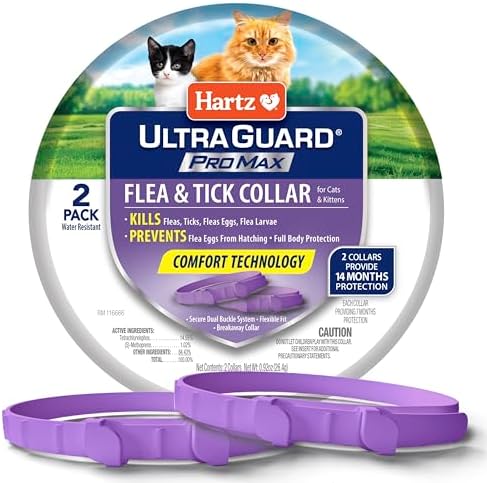
BEST LONG-LASTING Hartz UltraGuard ProMax Flea and Tick Collar for Cats, 14 Months. A soft, flexible collar that the maker rates for 14 months of flea and tick protection at a budget price.
BEST PLANT-BASED Plant-Oil Flea and Tick Collar for Cats, 12-Month Protection. A waterproof collar crafted with plant oils that the maker rates for 12 months and labels safe for kittens.
How We Chose These Products
We started from Amazon listings for cat flea collars and kept only products labeled for cats and kittens, favoring a clear ingredient type, a stated duration and a breakaway or adjustable design, with no more than two products per brand. Dog products were excluded because they can contain permethrin, which is toxic to cats.
We included veterinary-grade, conventional and plant-based collars so you can match the product to your cat. Nothing here was tested on our own cats.
Comparison Table
| Pick | Type and stated duration | Best for |
|---|---|---|
| Seresto 8-Month Flea and Tick Collar for Cats and Kittens, 1 Count | Vet-grade, up to 8 months | Long, proven protection |
| Hartz UltraGuard ProMax Flea and Tick Collar for Cats, 14 Months | Conventional, up to 14 months | Longest stated duration |
| Plant-Oil Flea and Tick Collar for Cats, 12-Month Protection | Plant oils, up to 12 months | Natural-ingredient households |
| Hartz UltraGuard Purple Flea and Tick Collar for Cats, 7 Months | Conventional, up to 7 months | Low-cost basic protection |
| Zodiac Breakaway Flea and Tick Collar for Cats, 13 inch | Conventional, breakaway buckle | Outdoor cats that climb |
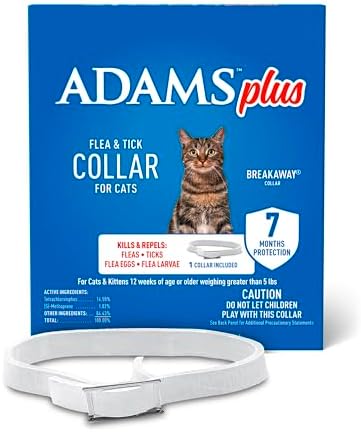
| Adams Plus Flea and Tick Collar for Cats, Adjustable, 1 Count | Conventional with growth regulator | Breaking the flea life cycle |
| Plant-Based Flea and Tick Collar for Cats, 5 Pack, 8 Months Each | Plant-based, up to 8 months each | Multi-cat households |
| Premium Plant-Based Cat Flea Collar, 6-Month, for Small Kittens | Plant-based essential oils, up to 6 months | Small kittens |
| Natural Waterproof Flea and Tick Collar for Cats, 2 Pack, 8 Months | Plant-based, up to 8 months each | Value natural two-pack |
| Seresto 8-Month Flea and Tick Collar for Cats and Kittens, 2 Count | Vet-grade, up to 8 months each | Two cats or a full year plus |
The 10 Best Cat Flea Collars
1. Seresto 8-Month Flea and Tick Collar for Cats and Kittens, 1 Count
BEST OVERALL

Seresto is the reference point for the best cat flea collar comparison. The band releases imidacloprid and flumethrin in low doses over up to eight months to kill and repel fleas and ticks on contact. It is odorless and non-greasy, has a ratchet breakaway release, and is labeled for cats and kittens 10 weeks and older.
Best for: Long, proven protection
2. Hartz UltraGuard ProMax Flea and Tick Collar for Cats, 14 Months
BEST LONG-LASTING

Hartz ProMax is the longer-lasting upgrade to the classic UltraGuard line: a soft, flexible band rated by the maker for up to 14 months against fleas, ticks and flea eggs, one of the longest stated durations here. It is a conventional insecticide collar, so follow the age and weight limits on the label closely.
Best for: Longest stated duration
3. Plant-Oil Flea and Tick Collar for Cats, 12-Month Protection
BEST PLANT-BASED

The best cat flea collar pick for owners who want to avoid synthetic insecticides. The listing says it is crafted with plant oils, is waterproof, offers up to 12 months of protection and is labeled as suitable for kittens. Essential-oil collars repel rather than kill on contact, so they suit lower-pressure homes.
Best for: Natural-ingredient households
4. Hartz UltraGuard Purple Flea and Tick Collar for Cats, 7 Months

The purple UltraGuard is the long-running budget collar from Hartz, rated for seven months of flea and tick protection. It is a simple, lightweight, inexpensive band for cats and kittens above the label minimum age, and a reasonable backup for an indoor cat.
Best for: Low-cost basic protection
5. Zodiac Breakaway Flea and Tick Collar for Cats, 13 inch

Zodiac builds this collar around a breakaway buckle that opens under pressure, which matters for cats that climb, squeeze through fences or roam. The 13-inch band fits most adult cats once trimmed. Check the label for age minimums and do not combine it with other insecticides unless your vet approves.
Best for: Outdoor cats that climb
6. Adams Plus Flea and Tick Collar for Cats, Adjustable, 1 Count

Adams Plus is a conventional adjustable collar from a long-established pest-control brand. The Plus formulation targets flea eggs and larvae as well as adults, which helps break the life cycle. It is for cats over the label minimum age.
Best for: Breaking the flea life cycle
7. Plant-Based Flea and Tick Collar for Cats, 5 Pack, 8 Months Each

A five-pack of plant-based collars for multi-cat homes. Each collar is rated for eight months and is water-resistant, adjustable and lightweight. The ingredients are plant-derived, so it relies on repellent action, and spares help when a collar is lost or chewed.
Best for: Multi-cat households
8. Premium Plant-Based Cat Flea Collar, 6-Month, for Small Kittens

Marketed for small kittens and built on plant-based essential oils, this collar states six months of protection and a waterproof build. Kittens are the most sensitive to anything applied to their skin, so confirm the age minimum and have a vet check a very young kitten before using any collar.
Best for: Small kittens
9. Natural Waterproof Flea and Tick Collar for Cats, 2 Pack, 8 Months

A two-pack of natural collars rated for eight months each, roughly 16 months for one cat or a spare for a second. The listing describes them as waterproof and adjustable. Treat it as a repellent layer, not a replacement for vet-prescribed treatment during an infestation.
Best for: Value natural two-pack
10. Seresto 8-Month Flea and Tick Collar for Cats and Kittens, 2 Count

The same Seresto collar as our top pick, sold as a two-pack: up to 16 months for one cat, or both cats on the same schedule. The collars carry imidacloprid and flumethrin and include the ratchet breakaway. Buying from an authorized seller reduces the risk of counterfeits.
Best for: Two cats or a full year plus
How to Choose a Cat Flea Collar
Picking a collar comes down to what is in it, how long it lasts, whether it can break away and whether your cat will tolerate it.
| Factor | What to look for |
|---|---|
| Active ingredient | Imidacloprid and flumethrin (Seresto) are the most studied. Conventional collars use older insecticides. Plant-oil collars repel rather than kill. |
| Stated duration | About 6 to 14 months here. Longer is cheaper per month, but only if the collar stays on and intact. |
| Breakaway design | A buckle that opens under pressure prevents a snagged cat from choking. Essential for outdoor and climbing cats. |
| Age and weight limits | Every label sets a minimum age, often 10 to 12 weeks. Never go below it. |
| Water resistance | Matters for outdoor cats and bathing routines. Check whether water shortens the stated duration. |
| Scent and skin | Some cats react to oils or insecticides with hair loss or redness. Check the neck daily for the first week. |
Indoor-only cats may do fine with a lighter plant-based collar, while a cat that goes outside, lives with dogs or shares a home with an active flea problem usually needs a vet-grade product. If fleas are already present, a collar alone rarely clears a house.
Buying and Care Tips
- Fit the collar so two fingers slide under it, then trim and discard the excess tail.
- Wash your hands after handling a collar and keep it away from children.
- Check the neck daily for the first week for redness or hair loss.
- Note the start date so you replace it before the stated duration ends.
- Treat the home too: wash bedding hot and vacuum carpets and furniture.
Honest Limits
- We did not test these collars. The notes come from product listings and manufacturer information.
- This is not veterinary advice. Make flea control choices with your vet.
- Stated durations come from makers and can be shortened by water, scratching or a loose fit.
- Plant-based collars are less well studied than veterinary-grade products.
- We allowed two Seresto and two Hartz products, within our two-per-brand limit.
- Listings change often, so confirm ingredients, pack size and age limits before buying.
Who Should (and Should Not) Use One
The best cat flea collar suits owners who struggle to keep up with monthly spot-on drops, cats that go outdoors in tick country, and multi-cat homes where months of continuous cover is simpler than tracking several dosing dates. A collar also helps with cats that fight pills or hide after a spot-on treatment.
However, a collar is not right for every cat. Kittens under the age on the label, pregnant or nursing queens, and cats with skin conditions around the neck should use a vet-prescribed alternative instead. Cats that roam through brush can snag a collar, so a breakaway buckle is essential. Above all, the EPA warns never to use a dog product on a cat, to match the product to your cat’s weight, and to watch for reactions after the first use (see EPA guidance on controlling fleas and ticks). If your cat already has a heavy infestation, a collar alone is unlikely to clear it; ask your vet about a fast-acting treatment first.
Common Mistakes Buyers Make
- Fitting it too loose. The band must touch the coat to spread the active ingredient. Leave room for two fingers, trim the excess, and check the fit as the cat grows or sheds its winter coat.
- Assuming natural means harmless. Essential-oil collars can still irritate skin, and some oils are toxic to cats. Read the label and watch the neck for redness in the first week.
- Buying by months of protection alone. A long-lasting collar on an indoor cat may be overkill, while an outdoor cat in a tick area needs tick cover specifically, not just flea cover.
- Doubling up with spot-ons. Using two pesticide products at once overexposes the cat. Switch methods only after the previous product has run its course or your vet says it is safe.
- Buying from unverified sellers. Counterfeit collars exist. Buy from the brand store or an authorized retailer and check the packaging for a registration number.
Frequently Asked Questions
What is the best flea collar for cats?
The Seresto 8-Month collar is the most widely recommended for its veterinary-grade ingredients and breakaway design. Hartz ProMax and plant-oil collars are the main alternatives.
Are flea collars safe for cats?
Collars labeled for cats and used per the label are generally considered safe for healthy adult cats. Kittens and sensitive or sick cats need a vet’s input first.
Can I use a dog flea collar on my cat?
No. Many dog flea products contain permethrin, which is toxic to cats.
How long does a cat flea collar last?
Makers state six to fourteen months. Water, scratching and a loose fit shorten the real-world duration.
Do flea collars work on kittens?
Only if the label allows it. Seresto is labeled for kittens 10 weeks and older; check every product.
Do natural flea collars actually work?
Plant-oil collars mainly repel fleas. They can help in low-risk homes but are not a treatment for an active infestation.
How tight should a cat flea collar be?
Snug enough not to slip over the head, with room for two fingers underneath. Trim the excess.
Can I use a flea collar with spot-on treatments?
Not unless your veterinarian approves. Doubling up can cause overdose.
What are signs my cat is reacting to a flea collar?
Hair loss or redness at the neck, drooling, lethargy, vomiting or tremors. Remove the collar and call your vet.
Does a flea collar clear fleas already in the house?
No. You also need to wash bedding, vacuum thoroughly and treat all other pets.
The Bottom Line
For most cat owners, the Seresto 8-Month collar is the best-equipped buy here because its ingredients are the most studied and it has a true breakaway release. Hartz ProMax is the budget choice for long coverage, and the plant-oil collars suit low-risk homes that want to avoid synthetic insecticides.
Whatever you choose, read the label, confirm the age limits, fit it correctly and talk to your vet. Related reading: our guides to the best dog grooming vacuums, paw trimmers, grooming scissors and pill cutters.
Last reviewed: October 23, 2026.