The best cold weather hunting boots keep your feet warm and dry through long hours on a stand or in a blind. Cold feet end a hunt faster than almost anything else, so insulation, waterproofing and fit matter more than looks. The choice also depends on your style: rubber boots suit wet ground and scent control, while leather boots suit long walks and rough terrain.
What are the best cold weather hunting boots? For sitting in a stand or blind, the insulated rubber options from LaCrosse and MUCK are the strongest on ratings and rating volume. For hiking in, the ROCKY and Irish Setter leather boots are the more comfortable picks.
In short: pick rubber for wet ground and stationary hunting, pick leather for long walks, and choose the insulation level by how much you move, not by the coldest day of the year.
Insulation is listed in grams, but there is no standard way to turn grams into degrees, so use the number only as a rough guide. Higher gram counts suit sitting still in the cold, while lower counts suit active hunting where your feet stay warm from walking. Thick socks and enough room in the toe also matter, because a tight boot cuts blood flow and makes feet colder.
This guide was written by researching customer ratings and product listings, not by testing each boot ourselves. Below you will find our top three, how we chose, a comparison table, ten picks with honest pros and cons, a buying guide, care tips and answers to common questions.

Recommended Cold Weather Hunting Boots
As an Amazon Associate we earn from qualifying purchases. These are research-based picks, not products we have tested. How we choose.




Our Top 3 Picks
BEST OVERALL LaCrosse Alphaburly Pro 18-Inch Hunting Boots. An 18-inch insulated rubber boot with high ratings.
BEST FOR EXTREME COLD MUCK Arctic Pro Insulated Boot. A heavily reviewed insulated boot with a very high rating.
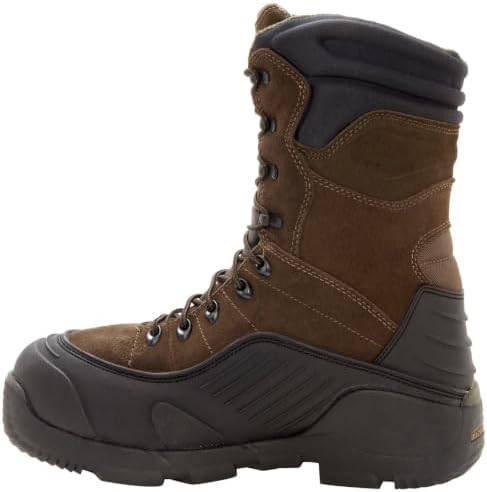
BEST LEATHER INSULATED ROCKY Blizzard Stalker 1200G Insulated Boot. A waterproof 1200g insulated leather boot.
How We Chose These Products
We started from Amazon listings for insulated and waterproof hunting boots and kept products rated 4.3 stars or higher, favoring those with at least 500 ratings. We allowed no more than two products per brand and left out general winter and hiking boots that are not sold for hunting, with one mountain boot included for long walk-ins. Two picks have fewer than 500 ratings and are marked.
Comparison Table
| Pick | Boot type | Best for |
|---|---|---|
| LaCrosse Alphaburly Pro 18-Inch Hunting Boots | 1600g insulated rubber | Stationary hunting in the cold |
| MUCK Arctic Pro Insulated Boot | Insulated rubber | Cold, wet ground |
| ROCKY Blizzard Stalker 1200G Insulated Boot | 1200g leather | Walking and sitting |
| ROCKY Retraction 800G Insulated Boot | 800g waterproof | Active hunting |
| LaCrosse Burly ZXT Rubber Hunting Boots | Scent-free rubber | Scent-conscious hunters |
| TIDEWE Rubber Hunting Boots | Insulated rubber | Value-minded hunters |
| Irish Setter Elk Tracker 12-Inch Hunting Boot | 12-inch leather | Long walks in rough terrain |
| Obcursco 400g Insulated Rubber Hunting Boots | 400g rubber | Active hunting |
| HUNTRITE Insulated Waterproof Hunting Boots | 1200g non-slip | Cold-weather hunting on a budget |
| Kenetrek Mountain Extreme 400 Insulated Boot | Mountain leather boot | Long walk-ins on steep terrain |
The 10 Best Cold Weather Hunting Boots
1. LaCrosse Alphaburly Pro 18-Inch Hunting Boots
BEST OVERALL

An 18-inch waterproof rubber hunting boot listed with 1600 grams of insulation. It suits sitting in a stand or blind.
Best for: Stationary hunting in the cold
2. MUCK Arctic Pro Insulated Boot
BEST FOR EXTREME COLD

A widely used insulated men’s boot with the largest rating base of the hunting-style boots here and a 4.7 average.
Best for: Cold, wet ground
3. ROCKY Blizzard Stalker 1200G Insulated Boot
BEST LEATHER INSULATED

A waterproof, insulated leather boot listed with 1200 grams of insulation. It balances walking comfort with cold weather warmth.
Best for: Walking and sitting
4. ROCKY Retraction 800G Insulated Boot
BEST LIGHTER INSULATION

A waterproof boot listed with 800 grams of insulation, a lighter option for active hunting where your feet stay warm from walking. It is a mid-weight insulated pick among the best cold weather hunting boots for a mix of walking and sitting.
Best for: Active hunting
5. LaCrosse Burly ZXT Rubber Hunting Boots
BEST SCENT-FREE RUBBER

A scent-free, waterproof rubber boot from LaCrosse for hunters who care about scent control.
Best for: Scent-conscious hunters
6. TIDEWE Rubber Hunting Boots
BEST VALUE RUBBER

A waterproof, insulated rubber hunting boot with nearly a thousand ratings.
Best for: Value-minded hunters
7. Irish Setter Elk Tracker 12-Inch Hunting Boot
BEST LEATHER HIKING HUNTER

A 12-inch men’s hunting boot from Irish Setter, suited to walking in rough terrain. This leather boot is a choice among the best cold weather hunting boots for long walks on rough ground.
Best for: Long walks in rough terrain
8. Obcursco 400g Insulated Rubber Hunting Boots
BEST LIGHT INSULATION RUBBER

A rubber boot listed with 400 grams of insulation and 6mm neoprene, lighter than heavily insulated options.
Best for: Active hunting
9. HUNTRITE Insulated Waterproof Hunting Boots
BEST BUDGET INSULATED

A 1200-gram insulated waterproof hunting boot with a non-slip sole. It is an insulated, waterproof option among the best cold weather hunting boots on this list.
Best for: Cold-weather hunting on a budget
10. Kenetrek Mountain Extreme 400 Insulated Boot
BEST MOUNTAIN BOOT

A leather mountain boot with 400 grams of insulation, suited to steep walk-ins rather than long sits.
Best for: Long walk-ins on steep terrain
How to Choose the Best Cold Weather Hunting Boots
| Factor | What to look for |
|---|---|
| Style | Rubber boots for wet ground and scent control; leather boots for long walks and rough terrain. |
| Insulation | More grams for sitting still, fewer for active hunting. Grams are only a rough guide. |
| Waterproofing | Look for sealed or fully rubber construction if you cross streams or hunt wet ground. |
| Fit | Leave room for thick socks, and try boots on with the socks you plan to wear. |
| Traction | Aggressive lugs help on mud and slopes, but check how they handle your terrain. |
Keeping Your Feet Warm in Cold Weather Hunting Boots
- Wear moisture-wicking socks and avoid cotton, which holds sweat and chills your feet.
- Do not pack a boot so tightly that you cut off circulation; room for air helps insulation.
- Take the boot liners out to dry after each hunt if the boot has removable liners.
- Carry a spare pair of dry socks for long sits.
Honest Limits of This Cold Weather Hunting Boots List
- We did not test these boots. The notes come from listings and customer ratings.
- Insulation grams are not a standard temperature rating, so they are only a rough guide.
- Two picks have fewer than 500 ratings, so their scores are less reliable.
- Prices, colors and sizes change often on Amazon, so check the current listing.
- Sizing varies by brand, and rubber boots in particular can run large, so read recent reviews.
- There is no single official authority source for this topic, so this guide relies on listing details and ratings.
Who Should Buy Cold Weather Hunting Boots
Not every hunt needs a heavy insulated boot. So decide how you hunt before you decide how warm the boot should be.
- Good fit: stand and blind hunters, because sitting still lets cold creep in through the soles.
- Good fit: late-season hunters who start before dawn and face freezing mornings.
- Good fit: hunters on wet ground, marsh edges or creek crossings, where waterproof construction matters.
- Think twice: if you walk long distances in mild weather. Heavy insulation can make your feet sweat, and damp feet get cold fast.
Warm feet are only part of the system. Our guides to the best hunting gloves and the best headlamp for hunting cover the rest of a cold-morning kit.
Insulation and Fit Guide for Cold Weather Hunting Boots
Many boots list insulation in grams, such as 400g, 800g or 1,200g. A higher number means more insulation, but it also means more bulk and weight. The table below gives a common rule of thumb.
| Insulation | Typical use | Activity level | Watch out for |
|---|---|---|---|
| 400g | Cool to cold days | Mostly walking | Too light for long sits in freezing weather |
| 800g | Cold days | A mix of walking and sitting | Check the fit with thick socks |
| 1,200g and up | Deep cold | Mostly sitting at a stand or blind | Bulk, weight and sweaty feet on long walks |
Fit matters as much as the number. Try boots on late in the day, when feet are at their largest, and wear the socks you plan to hunt in. Also check the shaft height, because taller rubber boots keep out more water on wet ground.
Common Mistakes When Buying Cold Weather Hunting Boots
Even the best cold weather hunting boots fail when they are chosen for the wrong reasons. Therefore, avoid these errors.
- Buying on insulation alone: a boot that is too tight cuts circulation and feels colder than a roomier, lighter one.
- Skipping the sock test: thick socks need space, so try the boot with the pair you will wear.
- Wearing cotton socks: cotton holds sweat and chills your feet.
- Ignoring break-in time: leather boots often need a few short walks before a long hunt.
- Forgetting scent control: rubber boots are popular because they hold less odor, but check that the style suits your terrain.
Care and Break-In Tips for Cold Weather Hunting Boots
Good care keeps insulation working. First, pull the liners and insoles out after each hunt if they are removable, and let them dry fully. Next, loosen the laces and let the boots air dry at room temperature, because strong heat can damage rubber and glue. Also wipe off mud and store the boots upright in a dry place.
Leather boots need a little extra attention. Clean off dirt, let them dry, and treat them with a conditioner or waterproofing product that suits the material, following the maker’s instructions. For a clear overview of how cold injury develops and why dry, roomy footwear matters, see the frostbite article on Wikipedia.
Low-Quality Cold Weather Hunting Boots Listings: Warning Signs
Many listings use the same words, so check these points before you buy.
- The insulation amount is missing, or the listing only says warm.
- Waterproof is claimed with no detail about construction, such as sealed seams or a rubber shell.
- No width or half-size information is given.
- Recent reviews mention leaks, sole separation or sizing that runs far off.
- Men’s and women’s sizing are mixed in the same listing.
Frequently Asked Questions
What are the best cold weather hunting boots?
Based on ratings and rating volume, the LaCrosse Alphaburly Pro and MUCK Arctic Pro lead for sitting in the cold, with the ROCKY and Irish Setter leather boots better for walking.
Are rubber or leather hunting boots warmer?
Insulated rubber boots are often warmer when you sit still because they seal out water, while leather boots can be warmer when you are moving and need breathability.
How many grams of insulation do I need?
Higher counts such as 1000 to 1600 grams suit sitting still, while lower counts suit active hunting. Treat grams as a rough guide only.
Do I need waterproof boots for hunting?
For wet ground, snow melt and stream crossings, yes. Waterproof boots keep feet dry, which is key to staying warm.
Should I buy hunting boots a size up?
Many hunters leave room for thick socks, but too much room causes blisters. Check the size chart and recent reviews for the specific boot.
How do I keep my feet warm in a stand?
Use insulated boots, wool or synthetic socks, and keep your feet dry. A boot with enough room allows air to insulate.
Can I use hiking boots for hunting?
You can for short walks, but dedicated hunting boots tend to have better insulation, scent control or tread for the field.
How should I care for rubber boots?
Rinse off mud, dry them completely and store them out of direct sun and heat, which can damage rubber.
How should I care for leather boots?
Clean off mud, let them air dry away from direct heat and treat the leather as the maker recommends to keep it water resistant.
Are the lower-rated picks worth buying?
All picks are rated 4.3 or higher. Those with fewer than 500 ratings are less proven, so read recent reviews before buying.
How many grams of insulation do the best cold weather hunting boots need?
It depends on your activity. A common rule of thumb is 400 grams for active hunting, 800 grams for a mix of walking and sitting, and 1,200 grams or more for long sits in deep cold. Therefore, match the number to how much you move.
Should hunting boots be a size bigger?
Many hunters choose a roomy fit so they can wear thick socks, because tight boots can cut circulation and make feet colder. However, too much room lets the foot slide, so test the boot with the socks you plan to wear.
How do I dry hunting boots after a hunt?
Remove the liners and insoles if they come out, loosen the laces and let the boots air dry at room temperature. Avoid placing them next to a heater, since strong heat can damage rubber and glue.
The Bottom Line on Cold Weather Hunting Boots
For sitting in a stand or blind, the LaCrosse Alphaburly Pro and the MUCK Arctic Pro are the safest choices here. For long walk-ins, the ROCKY and Irish Setter leather boots are more comfortable.
Whatever you choose, match the insulation to how much you move, wear good socks, and check recent reviews for sizing.
Last reviewed: October 23, 2026.