A true commercial dehumidifier is built for big, damp spaces such as basements, workshops, storage rooms and crawl spaces. Most shoppers end up choosing a large-capacity home-and-light-commercial model with a built-in pump or drain hose. Capacity ratings, coverage area and drainage matter more than any single feature, so this list focuses on high-capacity picks. Think about where the water will drain, how cold the room gets and how much floor space you can spare before you compare models.
What is the best commercial dehumidifier? Based on ratings and rating volume, the hOmeLabs 7,500 sq ft model with a pump is the strongest pick here at 4.6 stars, with the Yaufey 150 pint and the AEOCKY 5500 sq ft close behind.
In short: match the pint capacity to your room size, choose a pump if the drain is above the unit, and check the rating conditions on the exact listing before you order.
Moisture indoors encourages mold, and the EPA advises keeping indoor humidity below 60 percent, ideally between 30 and 50 percent. Capacity figures are often quoted at extreme test conditions, so real-world pints per day are lower. Always check the drainage option, the tank size and the operating temperature range.
This guide was written by researching customer ratings and product listings, not by testing each product ourselves. Below you will find our top three, how we chose, a comparison table, ten picks with honest pros and cons, a buying guide, tips and answers to common questions.

Recommended Commercial Dehumidifiers
As an Amazon Associate we earn from qualifying purchases. These are research-based picks, not products we have tested. How we choose.




Our Top 3 Commercial Dehumidifier Picks
BEST OVERALL hOmeLabs 7,500 Sq Ft Dehumidifier with Pump. A 50-pint dehumidifier with a built-in pump covering up to 7,500 square feet, rated 4.6 across over 15,000 ratings.
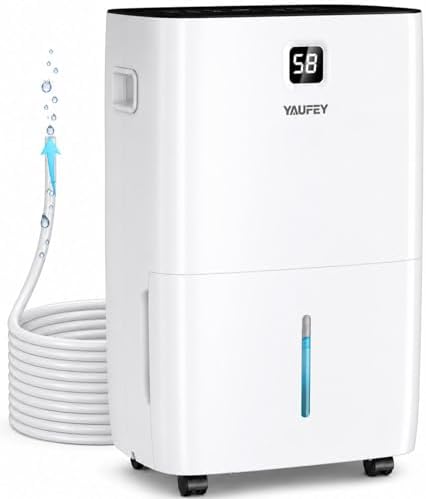
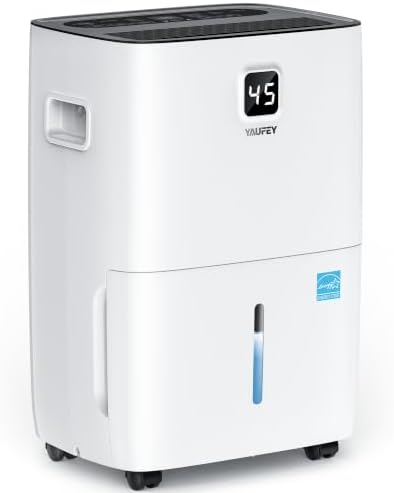
BEST HIGH CAPACITY Yaufey 150 Pint Dehumidifier with Pump. A 150-pint commercial dehumidifier with a pump for spaces up to 8,500 square feet, rated 4.5 across over 6,000 ratings.
BEST ENERGY STAR AEOCKY 5500 Sq Ft Energy Star Dehumidifier. An ENERGY STAR dehumidifier rated up to 80 pints a day for 5,500 square feet, rated 4.5 across over 7,000 ratings.
How We Chose These Products
We started from Amazon listings for commercial dehumidifiers and kept products rated 4.3 stars or higher, favoring those with at least 500 ratings. We allowed no more than two products per brand. Every pick has at least 500 ratings.
Commercial Dehumidifier Comparison Table
| Pick | Capacity and coverage | Best for |
|---|---|---|
| hOmeLabs 7,500 Sq Ft Dehumidifier with Pump | 50 pint, 7,500 sq ft, pump | Large basements |
| Yaufey 150 Pint Dehumidifier with Pump | 150 pint, 8,500 sq ft, pump | Very large spaces |
| AEOCKY 5500 Sq Ft Energy Star Dehumidifier | 80 pint, 5,500 sq ft | Efficiency-minded buyers |
| 80 Pint Dehumidifier for Basement with Drain Hose | 80 pint, 5,500 sq ft | Basements with a floor drain |
| 80 Pint Energy Star Dehumidifier for Basement 6,000 Sq Ft | 80 pint, 6,000 sq ft | Larger basements |
| hOmeLabs 7,000 Sq Ft 50 Pint Dehumidifier | 50 pint, 7,000 sq ft | Large rooms |
| Waykar 80 Pint 5000 Sq Ft Energy Star Dehumidifier | 80 pint, 5,000 sq ft | Basements |
| Waykar 120 Pint 6000 Sq Ft Energy Star Dehumidifier | 120 pint, 6,000 sq ft | Very damp spaces |
| 120 Pint Dehumidifier for Basement 6,000 Sq Ft with Drain Hose | 120 pint, 6,000 sq ft | Large wet basements |
| 4000 Sq Ft 58 Pint Dehumidifier for Basement with Drain Hose | 58 pint, 4,000 sq ft | Mid-size basements |
The 10 Best Commercial Dehumidifiers
1. hOmeLabs 7,500 Sq Ft Dehumidifier with Pump
BEST OVERALL

A 50-pint dehumidifier with a built-in pump covering up to 7,500 square feet, rated 4.6 across over 15,000 ratings.
Best for: Large basements
2. Yaufey 150 Pint Dehumidifier with Pump
BEST HIGH CAPACITY

A 150-pint dehumidifier with a pump for spaces up to 8,500 square feet, rated 4.5 across over 6,000 ratings.
Best for: Very large spaces
3. AEOCKY 5500 Sq Ft Energy Star Dehumidifier
BEST ENERGY STAR

An ENERGY STAR dehumidifier rated up to 80 pints a day for 5,500 square feet, rated 4.5 across over 7,000 ratings.
Best for: Efficiency-minded buyers
4. 80 Pint Dehumidifier for Basement with Drain Hose
BEST WITH DRAIN HOSE

An ENERGY STAR 80-pint dehumidifier with a drain hose for 5,500 square feet, rated 4.5 across about 6,500 ratings.
Best for: Basements with a floor drain
5. 80 Pint Energy Star Dehumidifier for Basement 6,000 Sq Ft
BEST COVERAGE VALUE

An ENERGY STAR 80-pint light commercial dehumidifier with a drain hose covering 6,000 square feet, rated 4.5 across over 4,000 ratings.
Best for: Larger basements
6. hOmeLabs 7,000 Sq Ft 50 Pint Dehumidifier
BEST BUDGET HOMELABS

A 50-pint dehumidifier covering up to 7,000 square feet, rated 4.4 across over 25,000 ratings.
Best for: Large rooms
7. Waykar 80 Pint 5000 Sq Ft Energy Star Dehumidifier
BEST WAYKAR

An ENERGY STAR 80-pint dehumidifier for 5,000 square feet, rated 4.3 across over 22,000 ratings.
Best for: Basements
8. Waykar 120 Pint 6000 Sq Ft Energy Star Dehumidifier
BEST WAYKAR HIGH CAPACITY
An ENERGY STAR 120-pint commercial dehumidifier for 6,000 square feet, rated 4.3 across over 22,000 ratings.
Best for: Very damp spaces
9. 120 Pint Dehumidifier for Basement 6,000 Sq Ft with Drain Hose
BEST 120 PINT VALUE
A 120-pint basement and commercial dehumidifier with a drain hose for 6,000 square feet, rated 4.5 across about 6,500 ratings.
Best for: Large wet basements
10. 4000 Sq Ft 58 Pint Dehumidifier for Basement with Drain Hose
BEST MID CAPACITY

A 58-pint basement dehumidifier with a drain hose for 4,000 square feet, rated 4.4 across about 1,100 ratings.
Best for: Mid-size basements
How to Choose a Commercial Dehumidifier
| Factor | What to look for |
|---|---|
| Capacity | Match pints per day and coverage area to your space; larger, wetter areas need more. |
| Drainage | A built-in pump or drain hose avoids emptying the tank. |
| Coverage area | Listed square feet assume specific conditions; size up for very damp rooms. |
| Operating range | Check the minimum temperature for cool basements and crawl spaces. |
| Energy and noise | ENERGY STAR models use less power; check noise levels for living areas. |
Buying and Care Tips
- Close windows and doors in the room you are drying.
- Clean the filter regularly.
- Set humidity to 45 to 50 percent.
- Use the continuous drain option for hands-off use.
Honest Limits
- We did not test these products. The notes come from listings and customer ratings.
- We did not test these dehumidifiers. The notes come from listings and customer ratings.
- Capacity figures are manufacturer claims under specific test conditions.
- True commercial-grade (LGR) units were mostly too thinly rated to include, so these are high-capacity consumer models.
- Ratings change over time, so check the current listing.
- Prices, colors, sizes and bundles change often on Amazon, so check the current listing.
- Authority source: EPA, mold and moisture guidance (epa.gov).
Who Needs a Commercial Dehumidifier (and Who Does Not)
You need a commercial dehumidifier when a standard 30 or 50 pint home unit runs constantly and still cannot hold the room below 60 percent humidity. That usually describes finished basements over 1,500 square feet, workshops with concrete floors, storage rooms full of cardboard, and crawl spaces that stay damp after rain. In addition, anyone dealing with the aftermath of a leak or flood benefits from a high-capacity unit, because drying a soaked space quickly limits mold growth.
On the other hand, a single bedroom, bathroom or small apartment does not need this much capacity. A big unit in a small room cycles on and off constantly, which wastes energy and shortens the compressor’s life. For a damp bedroom or a plant room, a smaller model such as those in our humidifier for plants guide covers the opposite problem, and a 30 pint dehumidifier is usually enough.
The EPA recommends keeping indoor humidity below 60 percent, and ideally between 30 and 50 percent, to prevent mold (EPA: A Brief Guide to Mold, Moisture and Your Home). If a cheap hygrometer shows your space sitting above 60 percent for days, that is the clearest sign you need more capacity.
Commercial Dehumidifier Capacity by Space
Capacity ratings are measured in pints of water removed per day, and the right number depends on both the size of the space and how wet it is. The table below gives practical starting points. Because manufacturers test under different conditions, treat the listed coverage area as a best case and size up if the space is very damp or cold.
| Space | Typical size | Suggested capacity | Drainage |
|---|---|---|---|
| Finished basement, slightly damp | 1,500 to 3,000 sq ft | 50 to 60 pints per day | Gravity hose to a floor drain |
| Unfinished basement, musty smell | 2,000 to 4,500 sq ft | 80 pints per day | Hose or built-in pump |
| Workshop or garage | Up to 5,000 sq ft | 80 to 120 pints per day | Pump to a sink or outside |
| Crawl space | Varies | 50 to 80 pints, low-temperature rated | Pump, since there is rarely a drain |
| Flood or leak recovery | Any | 120 pints or more, run with fans | Pump with a long hose |
Cold rooms deserve special attention. Below about 65 degrees Fahrenheit, standard compressor units frost up and remove far less water, so a model with auto-defrost or a low-temperature rating is worth the extra size.
Common Mistakes When Buying a Commercial Dehumidifier
- Comparing old and new pint ratings. Older units were rated at 80 degrees and 60 percent humidity, whereas newer ratings use 65 degrees. A 70 pint rating under the old rule is similar to a 50 pint rating under the new one, so compare like with like.
- Forgetting where the water goes. A 120 pint unit fills a bucket in a few hours. Unless you want to empty it twice a day, plan a hose or pump route before you buy.
- Trusting the square-footage headline. A 7,000 square foot claim assumes a sealed, mildly damp room. Real basements rarely match that.
- Placing it against a wall. Dehumidifiers need airflow on the intake and exhaust sides. Leave at least a foot of clearance.
- Skipping the hygrometer. Without a separate humidity reading you cannot tell if the unit is actually working. A basic digital hygrometer makes the decision obvious.
Commercial Dehumidifier Setup, Care and Maintenance
After unboxing, let the unit stand upright for at least 24 hours before switching it on, because the refrigerant needs to settle after shipping on its side. Then set the target humidity to around 50 percent rather than the lowest setting, since chasing 30 percent in a basement wastes power and dries out wood. Run a hose to a drain if possible, keeping it short and sloping downward.
Clean the filter every two to four weeks during humid months. A clogged filter is the most common cause of poor performance and frozen coils. Also wipe the bucket or pump reservoir monthly, because standing water grows slime that can block the pump. Finally, check the hose for kinks after moving the unit.
In winter, if the space drops below the unit’s rated temperature, switch it off and store it clean and dry. A commercial dehumidifier that is maintained this way often lasts several seasons longer than one left to run unattended. If you are also drying out a damp garage or shop floor, our boot dryer guide covers smaller moisture problems, and our guide to heaters for large rooms helps keep cold basements above the frost-up temperature.
How to Spot a Low-Quality Commercial Dehumidifier Listing
- A pint figure with no test condition stated, or an unusually high number such as 150 pints paired with a small, light unit.
- No Energy Star mention and no stated wattage.
- A built-in pump with no stated lift height, which tells you how far it can push water upward.
- Reviews that describe the unit frosting over in a cool basement, which suggests no auto-defrost.
- Brand names that change between the title, the photos and the manual.
Frequently Asked Questions
What is the best commercial dehumidifier?
Based on ratings and rating volume, the hOmeLabs 7,500 sq ft model with pump leads this list.
What size dehumidifier do I need?
Match the pint capacity and coverage to your space; size up for very damp rooms.
What humidity level should I aim for?
The EPA advises keeping indoor humidity below 60 percent, ideally 30 to 50 percent.
Do I need a pump?
A pump helps when the drain is above the unit; otherwise a drain hose is enough.
Can I use one in a crawl space?
Check the minimum operating temperature on the listing before you buy.
Are these real commercial units?
Mostly high-capacity consumer models; true commercial units were thinly rated.
Why are pint ratings quoted at 95 degrees?
They are test conditions, so real-world output is lower.
How often should I clean the filter?
Check it regularly, as often as the manual advises.
Do they use a lot of power?
ENERGY STAR models use less power; check the listing.
Are the lower-rated picks worth buying?
All picks are rated 4.3 or higher with thousands of ratings.
More questions about running a commercial dehumidifier
Can a commercial dehumidifier run continuously
Yes, most are designed for continuous operation when connected to a drain or pump, with a humidistat cycling the compressor as needed. Let the unit rest if the room is below its rated temperature, since it will frost rather than dry.
Where should I place a commercial dehumidifier in a basement
Put it near the centre of the space or close to the dampest wall, with at least a foot of clearance on all sides. Keep doors to the rest of the house closed so it is not trying to dry the whole building.
Does a commercial dehumidifier heat the room
A little. The compressor and fan release some warmth, so a large unit can raise a closed basement by a few degrees. That is usually helpful in a cool, damp space, but it is one more reason not to oversize for a small room.
The Bottom Line
For most large damp spaces, the hOmeLabs 7,500 sq ft model with pump is the safest buy, and the Yaufey and AEOCKY units are strong alternatives.
Whatever you choose, size the capacity to your space, plan the drainage and check the listing details.
Last reviewed: October 23, 2026.