In the knee scooter vs crutches decision, both options keep weight off an injured foot. The best choice depends on your injury, balance and home layout.

Knee scooter vs crutches: scooter strengths
- Rests your knee on a pad, so hands and underarms are less sore.
- Works best on flat, open floors, however.
- Also needs space to turn.

Crutches vs a knee scooter: crutch strengths
- Handle stairs and narrow spaces more easily.
- In contrast, can strain hands and underarms.
- Also need practice to use safely.
Knee scooter options
| # | Product | Where to check |
|---|---|---|
| 1 | KneeRover Economy Knee Scooter, Blue | Check current price on Amazon |
| 2 | KneeRover Steerable Knee Scooter Foldable Mobility Aid & Knee Walker with Basket for Adults… | Check current price on Amazon |
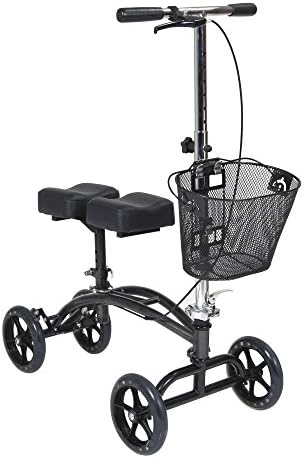
| 3 | Drive Medical Adjustable Steerable Knee Walker Scooter with Basket | Check current price on Amazon |
| 4 | Roscoe Medical Knee Scooter for Adults for Foot Surgery, Foldable & Adjustable Knee Walker f… | Check current price on Amazon |
As an Amazon Associate we earn from qualifying purchases. Prices and availability change, so confirm the price on Amazon before buying. These are research-based picks, not products we have tested. How we choose.



Tips
- Ask your doctor or physical therapist first.
- Then practice in an open space.
- Remove loose rugs.
- Finally, check weight limits.
Getting Around Your Home Safely
Mobility aids work best in a home that has been prepared. Clear the floor of loose rugs, cords and clutter. Next, move furniture to create wide paths, and keep frequently used items at waist height to avoid bending. Add night lights along the route to the bathroom. If you use a knee scooter, make sure doorways are wide enough and floors are smooth. If you use crutches, wear shoes with good grip on your uninjured foot, and remember that wet floors are especially risky.
Similarly, plan ahead for the bathroom. A shower chair, a handheld shower head and a non-slip mat can make bathing safer. Ask your care team whether you need a raised toilet seat or grab bars.
Carrying Things While Using a Mobility Aid
- Use a backpack or crossbody bag to keep your hands free.
- Use a basket attached to a knee scooter if one is available.
- Otherwise, carry small items in your pockets.
- Use a tray with a strap or a rolling cart for meals if allowed.
- Above all, make several trips with lighter loads.
Stairs and Transport
Stairs are the biggest challenge with either option. Follow the technique your clinician teaches, which usually involves going up with the good leg first and down with the injured leg or crutches first. Also, use handrails whenever possible. If stairs are unavoidable, ask about alternatives such as sitting and bumping up the stairs. For car travel, have someone fold the scooter or crutches and place them in the car for you. Take care getting in and out of the vehicle.
Recovery, Rest and Mental Health
Recovery from a foot or ankle injury takes time, and being less mobile can be frustrating. Therefore, pace yourself, rest the injured area and follow your care plan. Stay connected with friends and family, and ask for help with tasks such as shopping. If you feel low or anxious about recovery, talk to your doctor.
Renting vs Buying a Knee Scooter or Crutches
If you need a mobility aid for a short period, renting can be a practical option. Many medical supply stores and pharmacies rent knee scooters and crutches, and some insurance plans cover part of the cost. In contrast, buying may make sense if you need it for many weeks or expect to use it again. Compare the total cost of renting for your expected recovery period against the purchase price, and ask your insurance whether it covers durable medical equipment.
Using a Knee Scooter Safely on Different Surfaces
- Smooth floors are best; avoid wet or slippery surfaces.
- Be careful on carpet, which can slow the wheels and cause the scooter to catch.
- Likewise, slow down on slopes and turns, and use the brakes.
- Avoid curbs, gravel and uneven ground unless the model is designed for it.
- Do not use it on stairs or escalators.
Keeping Your Strength and Fitness During Recovery
Staying active within your doctor’s guidance helps maintain strength and mood. Ask your physical therapist about exercises for your upper body and your good leg. Also keep your core active, and follow instructions about when and how to start putting weight on the injured foot. Do not rush the process, and report increasing pain or swelling to your care team.
Related guides
Knee Scooter vs Crutches by Injury and Situation
No single aid wins every situation. The table below shows how the knee scooter vs crutches decision usually plays out, but your care team has the final say for your injury.
| Situation | Usually better | Why |
|---|---|---|
| Non-weight-bearing foot or ankle injury, flat home | Knee scooter | Comfortable for weeks of indoor use and leaves a hand free. |
| Knee, hip or upper-leg injury | Crutches or another aid | You cannot rest the injured leg on a knee platform. |
| Multi-level home with stairs | Crutches, or both aids | A scooter cannot climb stairs, so many people keep crutches upstairs. |
| Short recovery of one to two weeks | Crutches | Cheaper, lighter and quick to learn for a brief period. |
| Long recovery of six weeks or more | Knee scooter | Spares hands, wrists and underarms over the long haul. |
| Poor balance or weak arms | Ask your clinician | A walker or wheelchair may be safer than either option. |
Who Should Choose a Knee Scooter vs Crutches
A knee scooter is the better fit for people who must stay off one foot for several weeks, spend most of the day indoors on smooth floors and want to cook, carry items and move around without sore hands. It also helps anyone with arthritis or wrist problems, because crutches load exactly those joints.
Crutches, on the other hand, suit shorter recoveries, homes with stairs and anyone who needs to get outside on uneven paths. Likewise, people with injuries above the knee cannot use a scooter at all. Many patients end up with both: a scooter for the main living area and crutches for stairs and car trips. If you lean towards a scooter, our list of the best knee scooters explains the differences between basic and all-terrain models. If a comfortable shoe on the good foot is a problem, see our guide to orthopedic shoes.
Sizing and Fit: Knee Scooter vs Crutches
Fit decides comfort with both aids. For crutches, the AAOS OrthoInfo guidance says the tops should sit about one to two inches below the armpits, the handgrips should line up with the top of the hip and your weight should go through your hands rather than the underarm pads. Elbows stay slightly bent.
For a knee scooter, adjust the platform so your hips stay level when your knee rests on the pad. If the injured side sits higher than the good hip, the pad is too tall. Then set the handlebar so your elbows bend slightly while you stand upright. Finally, check the weight limit, which is commonly about 300 pounds on standard models and higher on heavy-duty frames.
How to Spot a Low-Quality Knee Scooter Listing
Scooters range from solid medical equipment to flimsy copies. Therefore, read the listing with these points in mind:
- Brakes: look for dual hand brakes with a parking lock. A single rear brake is a sign of a budget frame.
- Wheel size: wheels of about eight inches or larger handle thresholds. Tiny wheels catch on carpet edges.
- Weight capacity: a clear number should appear in the specifications. If it is missing, move on.
- Adjustment range: the listing should give platform and handlebar height ranges, so you can confirm they suit your height.
- Reviews about wobble: complaints of steering shake or a loose platform point to weak welds or poor tolerances.
If you buy rather than rent, timing matters too. Mobility aids rarely go on deep sale, but our guide to tracking Amazon price drops shows how to catch a real reduction.
Frequently asked questions
Can I use a knee scooter on stairs?
No. Instead, use stairs as your doctor advises.
Is a knee scooter safe for everyone?
Not always. For example, injuries above the knee rule out a scooter, so ask your doctor.
Which is easier to learn?
Many find scooters easier, but practice helps with either. In a knee scooter vs crutches trial at the store, most people feel the difference within minutes.
Can I use them outdoors?
Only on smooth surfaces for most scooters. Crutches, however, cope with paths and grass.
Do you list prices?
No. Check the live price on Amazon.
Can I use a knee scooter on stairs?
No. Use stairs as your care team advises, often by sitting or using crutches or a handrail, and keep the scooter on the floor where you use it.
Which is better for a broken ankle?
It depends on your injury and your doctor’s guidance. Ask which option is safe for you.
Do knee scooters work on carpet?
Thick carpet can be hard to roll on. Scooters work best on smooth, flat surfaces.
How long does it take to learn to use crutches?
Most people get comfortable within a few days, but stairs and tight spaces may need extra practice.
More knee scooter vs crutches questions
Knee scooter vs crutches: which is safer?
Both are safe when used as taught. Crutches carry a higher risk of falls on wet floors and of underarm nerve irritation, while scooters tip if you take corners fast or hit a threshold.
Can I switch from crutches to a knee scooter mid-recovery?
Often yes, as long as your injury is below the knee and your doctor agrees. Many people start on crutches in hospital and move to a scooter at home.
Does insurance cover a knee scooter or crutches?
Crutches are commonly covered as durable medical equipment. Knee scooters are covered less often, so ask your insurer before renting or buying.
This is not medical advice. Ask your doctor or physical therapist what is safe for your injury. Product picks are research-based, not tested by us. Check current prices and details on Amazon.
More guides you may like
- Amazon Black Friday 2026: Dates, Tips and Products to Watch
- Black Friday vs Cyber Monday: Which Is Better to Shop?
- Black Friday 2026 Date: When Does It Start and End?
- Best Knee Scooters: 8 Top-Rated Picks
- 10 Best Shoulder Braces and Slings for Rotator Cuff Injury (2026)
- Best Volleyball Knee Pads: 8 Top-Rated Picks