Choosing a space heater size by watts is simpler than it sounds. First, measure your room. Then apply the rule of thumb and check the safety features.
This is a rule of thumb, not an exact calculation. In addition, insulation, windows and ceiling height change what you need.

Quick room size math for space heater watts
First, multiply length by width to get square feet. Then multiply by about 10 watts.
- 100 sq ft: about 1,000 watts
- 150 sq ft: about 1,500 watts
- Larger rooms may need more than one heater or a different heating source

Space heater options by room size
| # | Product | Where to check |
|---|---|---|
| 1 | Lasko 23″ Ceramic Tower Space Heater with Remote Control – Silver – 751320 | Check current price on Amazon |
| 2 | DREO Space Heater, Portable Electric Heaters for Indoor Use with Thermostat | Check current price on Amazon |
| 3 | DREO 25 Inch Electric Space Heater for Indoor Use, Large Room, Thermostat | Check current price on Amazon |
| 4 | Lasko 29″ Ceramic Tower Space Heater with Remote Control – Black – 5586 | Check current price on Amazon |
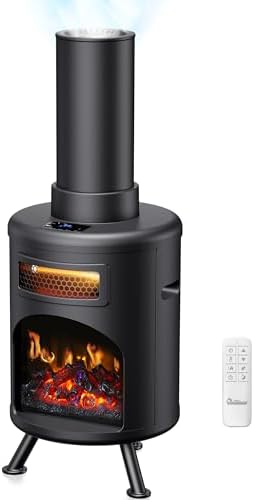
| 5 | DR. INFRARED HEATER DR-991 Portable Electric Fireplace Space Heater w/Humidifier & Remote, I… | Check current price on Amazon |
| 6 | duraflame Freestanding Electric Fireplace Stove Heater with 3D Flame Effect for 1,000 Sq. Ft… | Check current price on Amazon |
| 7 | TURBRO Suburbs TS25 Electric Fireplace Infrared Heater – 25″ Freestanding Fireplace Stove wi… | Check current price on Amazon |
As an Amazon Associate we earn from qualifying purchases. Prices and availability change, so confirm the price on Amazon before buying. These are research-based picks, not products we have tested. How we choose.


Safety features to look for
- Tip-over shutoff
- Overheat protection
- Cool-touch housing
- Thermostat
Space Heater Size Examples for Common Rooms
Numbers are easier to apply with examples. A small bedroom of about 10 by 10 feet has 100 square feet and needs roughly 1,000 watts under the rule of thumb, so a 1,500-watt heater has plenty of capacity and can be run on a lower setting. A living room of 12 by 18 feet has 216 square feet and would need about 2,160 watts, which is beyond a single standard heater. In that case, you might use the heater for the seating area only, keep the doors closed and seal drafts, or use central heating for the baseline and the heater as a boost. Meanwhile, a home office of 8 by 10 feet needs about 800 watts, so a smaller heater, or a 1,500-watt heater on a low setting, works well.
These space heater size figures are estimates. If you try a heater and the room never gets comfortable, the problem may be drafts, poor insulation or an undersized unit, not a faulty product.
Heater Controls and Features That Help
- Adjustable thermostat: holds a temperature so the heater cycles instead of running at full power.
- Multiple power settings: let you choose a lower wattage for small rooms.
- Timer: turns the heater off after a set period.
- Remote control: useful for larger rooms.
- Oscillation: spreads heat across a wider area.
- Eco mode: adjusts power to maintain a set temperature.
Noise, Smell and Air Quality
Some heaters make noise from fans or clicking as elements heat and cool, while others are nearly silent. If you are sensitive to noise, therefore, choose an oil-filled or panel heater. New heaters sometimes give off a mild smell when first used because of manufacturing residue; run the heater in a ventilated area for a short time to burn it off. However, persistent burning smells are a warning sign, so unplug the unit and contact the manufacturer. Electric heaters do not produce combustion gases, but they can dry the air, so consider a humidifier in very dry homes.
Heating Safely Around Children and Pets
Children and pets can be burned by hot surfaces or knock heaters over. Choose a heater with a cool-touch exterior, tip-over protection and a guard. Also, place it where it cannot be reached, and do not allow pets to sleep against the unit. Keep cords out of reach, and never use a heater in a child’s room without supervision unless the manufacturer says it is designed for that.
Related guides
What Size Space Heater Do I Need for Each Room Type?
The 10-watts-per-square-foot rule works for most rooms, but the way you use a room changes the answer. The table below shows typical ranges. Use it as a starting point. Afterwards, adjust for insulation and ceiling height.
| Room | Typical size | Suggested heater output | Notes |
|---|---|---|---|
| Home office or nursery | 80 to 120 sq ft | 750 to 1,200 watts | A low setting is often enough. Quiet panel or oil-filled models suit sleeping areas. |
| Bedroom | 120 to 180 sq ft | 1,200 to 1,500 watts | Choose a thermostat and timer so the heater cycles off overnight. |
| Living room | 180 to 300 sq ft | 1,500 watts plus central heat | One portable unit rarely heats the whole room. Aim it at the seating area. |
| Garage or workshop | 200 to 500 sq ft | Hardwired or 240-volt unit | Standard plug-in heaters cannot keep up. Consider a dedicated circuit or a different fuel. |
| Bathroom | 40 to 80 sq ft | 500 to 1,000 watts | Only use a heater rated for damp locations and keep it away from water. |
For rooms at the top of these ranges, see our guide to the best heaters for large rooms. If you want the look of a fire, a freestanding electric fireplace delivers the same 1,500 watts with a flame effect.
Common Space Heater Size Mistakes to Avoid
Most space heater size problems come from a handful of habits. Avoiding them saves money and keeps the heater safe.
- Ignoring the circuit: two 1,500-watt heaters on one 15-amp circuit will trip the breaker. Instead, spread them across different circuits.
- Using the heater as the only heat source: portable heaters are designed to supplement a central system, not replace it in a cold climate.
- Heating a room with the door open: warm air escapes into the hallway, so the heater never reaches its set temperature.
- Trusting the box claim alone: a label that says it heats 1,000 square feet assumes a well-insulated space and a mild climate.
- Buying by physical size: a tall tower and a compact cube can both be 1,500 watts. In other words, output, not height, decides coverage.
Why Most Portable Heaters Stop at 1,500 Watts
In North America, a standard 120-volt household outlet is usually on a 15-amp circuit. That circuit can deliver about 1,800 watts in total, and continuous loads should stay below 80 percent of that limit. As a result, manufacturers cap plug-in heaters at about 1,500 watts.
Consequently, bigger spaces need a different approach. A garage, for example, may call for a 240-volt unit installed by an electrician, or a vented fuel heater. If you are heating a vehicle instead of a room, our guide to the best 12V heater for a car covers the much lower outputs those systems allow. For vented gas options in larger indoor spaces, see our indoor propane heater guide.
Whatever size you choose, follow the NFPA heating safety guidance: keep three feet of clearance, plug directly into the wall and turn the heater off when you leave the room or go to sleep.
Frequently asked questions
What size space heater do I need for a 200 square foot room?
About 2,000 watts under the rule of thumb, which is more than one plug-in heater can deliver. Use a 1,500-watt heater for the area you sit in and rely on central heating for the rest.
Does ceiling height change what size space heater I need?
Yes. The rule assumes roughly eight-foot ceilings. For taller rooms, add about 10 to 20 percent per extra foot of height, or choose a radiant heater that warms people directly.
How many watts do I need per square foot?
About 10 watts is a common rule of thumb. For example, a 120 square foot room needs about 1,200 watts.
Can I use a heater with an extension cord?
Most makers advise against it, because thin cords can overheat under a 1,500-watt load.
Are oil-filled heaters safer?
They have no glowing element, but still need safe use.
Can a heater run all night?
Follow your maker’s guidance and use safety features.
Do you list prices?
No. Check the live price on Amazon.
More questions about space heater size
Is a bigger heater always better?
No. A heater that is too large can overheat a small room and cycle on and off. Match the output to the room size.
Can I heat a whole house with a portable heater?
Portable heaters are meant for supplemental heat in single rooms. Heating a whole home with them is usually inefficient and unsafe.
Do oil-filled heaters cost less to run?
They use similar electricity per watt, but they hold heat and cycle off, which some people find more comfortable and quiet.
Where should I place a heater in a room?
Place it on a flat surface, with clear space around it, ideally near the area you use but away from fabric and walkways.
Follow the manufacturer’s safety instructions and never leave a heater unattended. Product picks are research-based, not tested by us. Check current prices and details on Amazon.
More guides you may like
- Amazon Black Friday 2026: Dates, Tips and Products to Watch
- King Size Comforter Black Friday: Should You Buy?
- Black Friday 2026 Heater and Winter Deals: Fireplaces, Fire Pits and Boot Dryers
- Best Heaters for Large Rooms: 10 Top-Rated Picks
- Best King Size Comforters: 10 Top-Rated Picks
- 10 Best Indoor Propane Heater Options for Efficient and Safe Heating Solutions