The best knife for self-defense is, in practice, a reliable everyday-carry knife: one you can open with one hand, that locks solidly, fits your hand and is legal to carry where you live. Most people who carry a knife never use it defensively, and that is the point. A good EDC knife earns its place on daily tasks while being dependable in a rare emergency.
This guide covers ten well-regarded folding and fixed-blade knives from established makers and is honest about the legal and practical limits of carrying one.
What is the best knife for self-defense? For most people the Spyderco Para 3 Lightweight is the best choice: a compact, one-hand-opening folder with a strong compression lock and a blade length that is legal in more places than larger knives. The Benchmade Bugout is the premium lightweight alternative, and the Cold Steel Recon 1 is the pick for anyone who wants a larger, heavier-duty folder.
In short: choose a knife from a reputable maker with a secure lock, a blade around 3 inches, a one-hand opener and a pocket clip, then check it is legal to carry in your state, city and the places you go.

Recommended Self-Defense Knife Picks for Everyday Carry
As an Amazon Associate we earn from qualifying purchases. Product images and titles come from Amazon listings. How we choose.


Our Top 3 Self-Defense Knife Picks
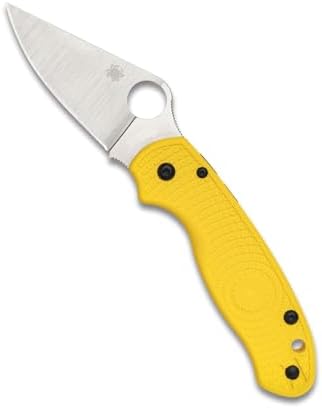
BEST OVERALL Spyderco Para 3 Lightweight Salt Folding Knife. Compact, light, with Spyderco’s compression lock and a blade length that is legal in most places.
BEST PREMIUM Benchmade Bugout EDC Knife, S30V Steel. An ultralight folder with S30V steel and the Axis lock, from one of the most respected US makers.
BEST HEAVY DUTY Cold Steel Recon 1, 4 inch S35VN Blade. A 4 inch S35VN blade, G-10 handle and Cold Steel’s Tri-Ad lock for people who want a bigger folder.
How We Chose These Products
We started from Amazon listings for folding and fixed-blade knives, then kept only knives from established makers with a strong lock, one-hand deployment and a stated steel or handle material. We favoured blade lengths around 3 to 4 inches, included two fixed blades for outdoor use, and capped the list at two knives per brand.
We did not test these knives. The pros and cons are based on each listing’s stated blade length, steel, lock type and handle material plus general knowledge of each design.
Self-Defense Knife Comparison Table
| Pick | Type and lock | Best for |
|---|---|---|
| Spyderco Para 3 Lightweight Salt Folding Knife | Folder, compression lock | Most people |
| Benchmade Bugout EDC Knife, S30V Steel | Folder, Axis lock | Lightweight premium carry |
| Cold Steel Recon 1, 4 inch S35VN Blade | Folder, Tri-Ad lock | Heavy-duty folder |
| Kershaw Blur Pocket Knife, 3.4 inch Recurve Blade | Assisted folder, liner lock | Fast one-hand opening |
| KA-BAR Full Size US Marine Corps Fixed Blade Knife | Fixed blade, leather sheath | Outdoor and camp use |
| Gerber StrongArm Fixed Blade Tactical Knife | Fixed blade, plain edge, coyote brown | Survival and outdoor kits |
| CIVIVI Praxis Folding Pocket Knife, 3.75 inch Blade | Flipper folder, liner lock | Value and flipper fans |
| Kershaw Cryo Pocket Knife, 2.75 inch Blade | Assisted folder, frame lock | Compact, discreet carry |
| Smith and Wesson Border Guard Folding Knife, 3.5 inch | Folder, serrated tanto, aluminium handle | Budget tactical |
| Spyderco Tenacious Lightweight Folding Knife | Folder, liner lock | Affordable Spyderco |
Knife Laws for Self-Defense Carry
Before anything else, learn the rules where you live and travel. US state and city laws vary on blade length, with 2.5, 3 and 4 inch limits all common; on lock type, with some places restricting locking or assisted-opening knives; on concealed versus open carry; and on fixed blades, which are often treated more strictly than folders. Automatic knives, balisongs and double-edged daggers are prohibited in many places, and rules outside the US are often tighter.
Carrying a knife also brings responsibility. Any defensive use has serious legal consequences and must be a genuine last resort when you cannot escape. Pair the knife with awareness, a plan to leave and call for help, and professional training, and never draw it as a threat. Fixed blades belong with outdoor kit such as hunting headlamps and hunting gloves, not on a belt in town.
The 10 Best Self-Defense Knife Picks for Everyday Carry
1. Spyderco Para 3 Lightweight Salt Folding Knife
BEST OVERALL

The Para 3 Lightweight is a compact version of Spyderco’s Paramilitary 2, with a plain-edge blade, a nylon handle and the compression lock, which is strong and closes one-handed without fingers in the blade path. The Salt version uses corrosion-resistant steel, and its roughly 3 inch blade stays inside many legal limits.
Best for: Most people
2. Benchmade Bugout EDC Knife, S30V Steel
BEST PREMIUM

The Bugout is the knife many people end up with after trying cheaper folders. It weighs very little, uses S30V stainless steel and Benchmade’s ambidextrous Axis lock, and opens with thumb studs from either side. Benchmade’s US-made quality shows in the fit and finish.
Best for: Lightweight premium carry
3. Cold Steel Recon 1, 4 inch S35VN Blade
BEST HEAVY DUTY

Cold Steel’s Recon 1 is a large tactical folder with a 4 inch S35VN blade, a G-10 handle, an ambidextrous clip and the Tri-Ad lock, designed to withstand hard use. A 4 inch blade exceeds the legal limit in some cities and states, so confirm local rules first.
Best for: Heavy-duty folder
4. Kershaw Blur Pocket Knife, 3.4 inch Recurve Blade

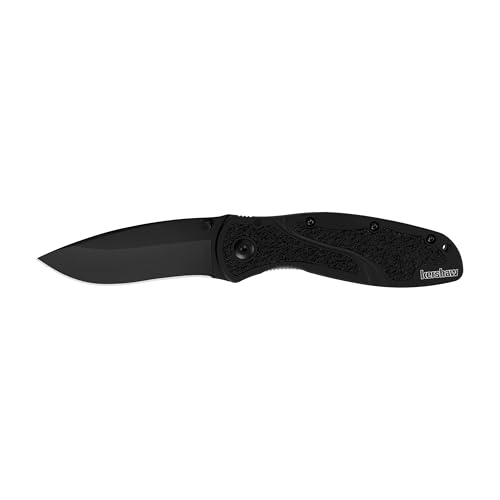
The Kershaw Blur pairs a 3.4 inch recurve blade with SpeedSafe assisted opening, so a push on the thumb stud flicks the blade out. The aluminium handle has grippy inserts and the recurve edge bites well in slicing cuts. Assisted-opening knives are restricted in some jurisdictions.
Best for: Fast one-hand opening
5. KA-BAR Full Size US Marine Corps Fixed Blade Knife

The KA-BAR USMC knife is a classic full-size fixed blade with a straight edge and leather sheath. Fixed blades have no lock to fail and suit outdoor work, but this is a pack knife for camping and hunting, not a daily carry, and fixed-blade carry is restricted in many areas.
Best for: Outdoor and camp use
6. Gerber StrongArm Fixed Blade Tactical Knife

Gerber’s StrongArm is a full-tang fixed blade with a plain edge, a rubberised handle and a sheath that mounts several ways. It is a compact survival knife for a hiking pack, vehicle kit or camp box. Check local rules on fixed-blade carry and keep it sheathed and secured.
Best for: Survival and outdoor kits
7. CIVIVI Praxis Folding Pocket Knife, 3.75 inch Blade

The CIVIVI Praxis is a flipper-opening folder with a 3.75 inch blade and a G10 handle that has built a reputation for quality at a mid-range price. The flipper and bearing pivot give smooth one-hand deployment without assisted springs. The blade is on the long side for some city limits.
Best for: Value and flipper fans
8. Kershaw Cryo Pocket Knife, 2.75 inch Blade

The Kershaw Cryo is a small steel-handled folder with SpeedSafe assisted opening, a frame lock and a 2.75 inch blade. The short blade keeps it legal in more places than most knives here, and the all-steel build is tough for its size.
Best for: Compact, discreet carry
9. Smith and Wesson Border Guard Folding Knife, 3.5 inch

The Smith and Wesson Border Guard is a budget tactical folder with a 3.5 inch partially serrated tanto blade in high-carbon stainless steel and an aluminium handle. It offers a lot of knife for the money, though fit, finish and lock strength are not in the same class as Spyderco or Benchmade.
Best for: Budget tactical
10. Spyderco Tenacious Lightweight Folding Knife

The Tenacious Lightweight is Spyderco’s value folder, with a plain-edge blade, a nylon handle and a liner lock. It gives you the Spyderco opening hole and ergonomics at a fraction of the Para 3’s price, a good first serious knife for anyone unsure how much they will carry.
Best for: Affordable Spyderco
How to Choose a Knife for Self-Defense
| Factor | What to look for |
|---|---|
| Blade length | Around 3 inches is useful and legal in most places. Confirm your local limit before buying longer. |
| Lock | Compression, Axis, Tri-Ad and frame locks are stronger than basic liner locks and are the most important safety feature. |
| Opening | Thumb hole, thumb stud or flipper all allow one-hand opening. Assisted and automatic opening are restricted in some jurisdictions. |
| Steel | S30V, S35VN and Salt steels hold an edge and resist rust. Budget steels sharpen easily but dull faster. |
| Handle | G-10, aluminium and FRN give grip and durability. The knife should fill your hand without hot spots. |
| Carry | A deep-carry clip keeps a folder secure and discreet. Fixed blades need a sheath that locks the knife in place. |
| Maker | Established brands have consistent lock tolerances and warranties, which matter more than tactical styling. |
For urban daily carry, a compact folder is more practical and more likely to be legal; a fixed blade belongs in the pack alongside cold weather hunting boots.
Self-Defense Knife Buying and Care Tips
- Check local law on blade length, lock type and carry method before you buy.
- Practise opening and closing the knife safely, with the edge pointed away from you.
- Keep the edge sharp; a dull knife needs more force and causes more accidents.
- Clean the pivot and lock, and oil the pivot lightly every few months.
- Leave the knife at home when visiting schools, courts, airports and venues that ban them.
- Take a professional self-defense class if personal safety is your reason for carrying.
Honest Limits
- We did not test these knives; notes are based on listing details and general knowledge of each design.
- We cannot advise on the law in your location. Rules change and vary by city; verify them yourself.
- None of this is self-defense instruction. Seek professional training.
- We left out ratings, review counts and prices because they change constantly.
Who Should Carry a Knife for Self-Defense (and Who Should Not)
A knife for self-defense makes sense for people who already carry a knife for daily tasks and want it to be dependable in a rare emergency. Tradespeople, hikers, campers and commuters who open boxes, cut cord and prepare food all fit that description. For them, choosing a knife with a strong lock and one-hand opening costs nothing extra in daily use, so it is an easy upgrade.
However, a knife is a poor choice as a first or only self-defense tool. It requires close contact, it escalates any confrontation and it carries serious legal consequences if used. Anyone whose main concern is personal safety is usually better served by awareness, avoidance, a loud alarm and, where legal, pepper spray. In short, carry a knife because it is useful, not because it feels protective.
Finally, some people should not carry at all. Anyone under the legal age in their state, anyone with a conviction that restricts weapon possession, and anyone who travels through schools, courthouses, airports or government buildings on a normal day will find a carried knife more of a liability than a help. The American Knife and Tool Institute keeps a state-by-state summary of knife laws that is a good place to start (AKTI: State Knife Laws), although it is not legal advice.
Blade Length and Carry Style by Use Case
Because laws and daily habits differ so much, the right knife for self-defense depends on where it will spend most of its time. The table below pairs common situations with sensible blade lengths and carry styles. Treat it as a starting point and then check your local limit.
| Situation | Blade length | Type and carry | Notes |
|---|---|---|---|
| Office and city commute | 2.5 to 3 inches | Slim folder, deep-carry clip | Stays within most municipal limits and does not print through clothing. |
| Trades and warehouse work | 3 to 3.5 inches | Sturdy folder with a strong lock | Daily cutting dulls edges, so easy sharpening matters more than exotic steel. |
| Hiking, camping and hunting | 3.5 to 5 inches | Fixed blade in a locking sheath | Fixed blades are stronger, but carry rules are stricter in towns on the way home. |
| Travel between states | Under 2.5 inches | Non-locking or small folder | Choose the most conservative option that works in every place on your route. |
| Rural property and vehicle | 3 to 4 inches | Folder or compact fixed blade | Check vehicle carry rules, which some states treat differently from carry on the person. |
As a rule, a 3 inch locking folder from an established maker covers most people. It is long enough for real work, short enough for most laws and light enough that you will actually carry it.
Common Mistakes When Buying a Knife for Self-Defense
- Buying for looks. Aggressive styling, serrations and black coatings do not make a knife more capable, but they can make it look worse to a police officer or a jury.
- Ignoring the lock. A weak liner lock can close on your fingers under hard use. Choose a frame lock, Axis-style lock, compression lock or Tri-Ad lock on any knife you might rely on.
- Choosing a blade that is too long. A 4 inch blade is illegal to carry in many cities. Longer is not better for defence and is often worse for daily tasks.
- Skipping the fit check. A handle that creates hot spots or slips when wet is a problem on day one. If you can, hold the knife before buying or read reviews from people with similar hand sizes.
- Trusting a cheap lookalike. Copies of popular designs often use soft steel and sloppy locks. Stick with brands that publish their steel and offer a warranty.
Caring for a Self-Defense Knife: Sharpening and Storage
A knife you might depend on should be sharp, clean and quick to open. After any wet or dirty job, rinse the blade, dry it and add a drop of oil to the pivot. Then open and close it a few times so the action stays smooth. Salt-series and stainless steels resist rust, but every pivot collects lint and grit over time.
Sharpen before the edge is truly dull, because a few light passes on a ceramic rod or guided sharpener are far easier than restoring a damaged edge. For most EDC steels, a 15 to 20 degree angle per side is a good default. In addition, check the lock-up every month by opening the knife and pressing gently on the spine; any play means it needs a pivot adjustment or a trip back to the maker.
At home, store knives out of reach of children, ideally in a locked drawer or box, and keep the sheath or clip with them. If you also carry gear for outdoor trips, the same storage habits apply to items from our guides to the best headlamp for hunting and the best hunting gloves, which often share a go-bag with a fixed blade.
How to Spot a Low-Quality Knife Listing
- No steel named, or vague labels such as high-carbon stainless with no grade.
- A lock type that is not stated, or photos that hide the lock entirely.
- Blade length missing or given only as overall length, which makes legal checks impossible.
- Brand names that are slight misspellings of well-known makers.
- Reviews that mention blade play, a lock that disengages, or a clip that snaps off within weeks.
When in doubt, buy from the maker’s own storefront or an authorised dealer, and keep the box and receipt, since reputable brands honour warranties only on genuine products. Tool storage advice from our socket organizer guide applies to knife collections as well.
Frequently Asked Questions
What is the best knife for self-defense?
A reliable everyday-carry folder from an established maker with a strong lock, such as the Spyderco Para 3 Lightweight or Benchmade Bugout, provided it is legal where you live.
Is it legal to carry a knife for self-defense?
It depends on your state, city and country. Many places restrict blade length, lock type and concealed carry. Check local law before carrying.
Folding or fixed blade for self-defense?
A folder is more practical and legal in more places for daily carry. Fixed blades suit outdoor use but are restricted in many areas.
What blade length is best?
Around 3 inches. It is useful for daily tasks and below many local blade-length limits, but check yours.
Are assisted-opening knives legal?
In many places yes, but some states and cities restrict them. Automatic knives are prohibited in more places still.
What is the strongest folding knife lock?
Compression, Axis, Tri-Ad and frame locks are considered stronger than a basic liner lock.
Can I carry a knife on a plane?
Not in carry-on luggage. Knives must go in checked bags, subject to airline and destination rules.
Do I need training to carry a knife?
Legally usually not, but professional self-defense and legal training are strongly recommended for anyone carrying for safety.
What steel is best for an EDC knife?
S30V and S35VN hold an edge and resist rust; Salt steels are nearly rustproof. Budget steels are fine if you sharpen regularly.
How should I store a knife at home?
Closed or sheathed, dry and out of reach of children, ideally in a locked drawer.
More questions about carrying a knife for self-defense
Is a fixed blade or a folder better as a knife for self-defense
A fixed blade is stronger and faster to deploy from a sheath, but it is harder to carry legally and discreetly. A locking folder with one-hand opening is the practical choice for most people, because it is the knife they will actually have with them.
Can I carry a knife for self-defense in my car
Many states treat a knife in a vehicle like a knife on your person, and some treat concealed storage in a car more strictly. Check your state rules before leaving a knife in a glove box or centre console.
Does a knife need to be sharp to be safe
Yes. A dull knife needs more force, slips more easily and causes more accidental cuts in daily use. Keep the edge maintained with light, regular sharpening rather than occasional heavy grinding.
The Bottom Line
For most people, the Spyderco Para 3 Lightweight is the best knife for self-defense because it is first a superb everyday knife: compact, light, strongly locked and legal in more places than larger blades. The Benchmade Bugout is the premium lightweight alternative, and the Cold Steel Recon 1 suits those who want a bigger folder and have checked local limits.
Whatever you choose, confirm the law, practise safe handling and treat the knife as a tool you hope never to use defensively. Awareness and avoidance protect you far more often than any blade.
Last reviewed: October 23, 2026.