Fit affects grip and protection. When you measure for goalie gloves, remember that every brand sizes a little differently, so use that brand’s chart.

Measuring for goalie gloves
- Wrap a soft tape around your hand below the knuckles.
- Compare the measurement to the brand’s chart.
- Check the finger length too.

Goalie gloves to consider
| # | Product | Where to check |
|---|---|---|
| 1 | Soccer Goalie Goalkeeper Gloves for Kids Boys Children Youth | Check current price on Amazon |
| 2 | Sportout Youth&Adult Goalie Goalkeeper Gloves,Strong Grip for The Toughest Saves, with Finge… | Check current price on Amazon |
| 3 | Sportout Goalie Gloves, Goalkeeper Gloves with Finger Protection, Breathable Soccer Goalie G… | Check current price on Amazon |
| 4 | Renegade GK Triton Goalie Gloves – Adult, Youth, Kids (Sizes 5-11, 3 Styles, Level 2) Pro-Te… | Check current price on Amazon |
As an Amazon Associate we earn from qualifying purchases. Prices and availability change, so confirm the price on Amazon before buying. These are research-based picks, not products we have tested. How we choose.


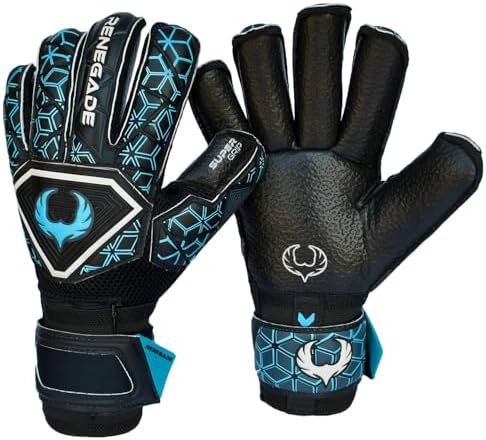
Goalie gloves sizing tips
- Allow room for growth only a little.
- Wash and air dry to keep grip.
- Replace worn palms.
Choosing the Right Glove for Your Level and Surface
Goalkeepers at different levels need different gloves. Beginners and young players do well with gloves that offer good grip and protection, but they do not need the most expensive latex. Experienced players often prefer high-grip, softer latex that gives maximum control but wears faster. If you train on artificial turf or hard surfaces, choose gloves with a more durable palm to resist abrasion. If you play mainly on grass in dry conditions, a softer palm can be a good option.
Consider the weather, too. Wet conditions call for a palm designed to hold grip when damp, and cold weather may call for a warmer glove with a thicker back.
Wearing In and Preparing New Gloves
- Dampen the palms lightly before first use to activate the latex grip.
- Flex the fingers and make fists several times to loosen the glove.
- Wear them in training before using them in a match.
- Avoid heat sources such as radiators or direct sun to dry them.
- Keep a spare pair in your bag for changing conditions.
Common Fit Problems and Fixes
If the gloves feel too tight across the knuckles, try a size up or a different cut. When the fingers slide forward, the gloves may be too long, or the wrist strap may need tightening. If you get blisters, check that seams are not rubbing and that the gloves are not too loose. Some players use thin inner gloves or tape to reduce friction. If the problem continues, try another brand, since cuts and shapes differ.
Protecting Your Hands Beyond Gloves
Gloves help, but technique matters too. Learn to catch and parry correctly to avoid finger injuries, warm up your hands and wrists before sessions and stop if you feel pain. If you have a finger or wrist injury, rest and seek advice from a medical professional or physiotherapist. Replace damaged gloves promptly, since worn palms reduce grip and protection.
Goalkeeper Training Tips That Complement Good Gloves
- Practice catching with soft hands, absorbing the ball’s force.
- Work on positioning and footwork, not only diving.
- Warm up your hands, wrists and fingers.
- Train with different ball types to adapt to conditions.
- Review technique with a coach and watch footage of your sessions.
Choosing Gloves for Different Weather
In wet weather, look for latex designed to hold grip when damp, and consider a spare pair. In cold weather, a thicker backhand and warm lining help, and in hot weather, breathable materials keep hands comfortable. Store gloves in a cool, dry place to preserve latex, and avoid leaving them in a hot car.
Young Keepers and Parents: What to Know
Children should wear gloves that fit now, with minimal growing room, and learn proper catching technique from the start. Encourage them to clean and dry their gloves after each session, and replace them when they are worn. A good fit builds confidence, and protection helps them enjoy the position.
Related guides
Goalie Gloves Size Chart: Measure, Then Compare
Most brands use a simple conversion. First, measure the circumference of your palm just below the knuckles, with the thumb out of the way. Then round up to the next whole inch and add one. For example, a 6.5-inch palm rounds to 7, plus 1, which gives a size 8. The table below shows how that works across the range.
| Palm circumference (inches) | Palm circumference (cm) | Typical glove size | Who it usually fits |
|---|---|---|---|
| 4.1 to 5.0 | 10.4 to 12.7 | 6 | Young children |
| 5.1 to 6.0 | 13.0 to 15.2 | 7 | Older children and small juniors |
| 6.1 to 7.0 | 15.5 to 17.8 | 8 | Teens and smaller adults |
| 7.1 to 8.0 | 18.0 to 20.3 | 9 | Average adult |
| 8.1 to 9.0 | 20.6 to 22.9 | 10 | Larger adult |
| 9.1 to 10.0 | 23.1 to 25.4 | 11 | Very large hands |
This chart follows the method published by glove maker Selsport in its glove size guide, which also advises measuring both hands and ordering for the larger one. However, cuts and brands differ, so treat it as a starting point rather than a rule.
Measure for Goalie Gloves by Age and Growth
Children need a different approach from adults. A six-year-old may move up a size every season, while a teenager may stay in one size for two years. Therefore, measure for goalie gloves at the start of every season and after any growth spurt. Buy the size that fits today, because a glove bought to grow into folds at the fingertips and makes catching harder.
Adults change less, but hand size still shifts. Measure again if you have lost or gained weight, or if you switch from a negative cut to a roomier flat cut. Keepers who also play field positions or other contact sports often notice calluses that make a slightly larger glove more comfortable.
Common Mistakes When You Measure for Goalie Gloves
- Measuring with the thumb included: the tape should sit below the knuckles with the thumb outside the loop. Including it adds a full size.
- Measuring the wrong hand: measure both and use the larger figure.
- Pulling the tape tight: it should sit flat on the skin without compressing it.
- Ignoring finger length: two players with the same palm circumference can have different finger lengths. If your fingers are long, check the length chart too.
- Skipping the brand chart: the generic table above is a guide. The brand chart is the one that matters.
How to Spot a Low-Quality Goalie Gloves Listing
Because gloves are sold by size number, listings can look alike. Check these details before you buy:
- A size chart with measurements: a serious listing links sizes to hand measurements. One that only says small, medium or large is a warning sign.
- Latex thickness: look for a palm thickness in millimeters, commonly 3 to 4 mm. No figure often means thin foam.
- Cut named: flat, rolled, negative or hybrid should be stated.
- Finger protection detail: if spines are included, the listing should say whether they are removable.
- Reviews that mention peeling: several reports of latex peeling in the first month point to poor bonding.
For a shortlist that passes these checks, see our roundup of the best goalie gloves. If you are also outfitting a keeper for indoor play, our guide to the best indoor soccer shoes covers the other end of the kit.
Frequently asked questions
Should goalie gloves be tight?
Snug but not painful. If you measure for goalie gloves correctly, the fit should feel secure across the palm.
How often should I replace them?
When the grip wears out.
Can I machine wash them?
Check the label.
What about finger protection?
Some gloves have spines; others do not.
Do you list prices?
No. Check the live price on Amazon.
Should goalie gloves be tight?
Snug but comfortable. They should not pinch or restrict movement, and they should not slide on your hand.
How do I choose between finger spine and no spine gloves?
Finger protection can lower injury risk for some players, but personal preference and coaching advice matter.
Can I wash goalie gloves in a washing machine?
Usually not. Rinse by hand with cool water and air dry. Check the label.
How often should I replace goalie gloves?
When the latex wears smooth or tears, or when the grip no longer feels secure. This depends on how often you play.
More questions about how to measure for goalie gloves
Do I measure for goalie gloves in inches or centimeters?
Either works, as long as you use the same unit as the brand chart. Most charts list both, and the inch-based rule of rounding up and adding one is the most common.
Should I measure for goalie gloves with or without the thumb?
Without. Keep the thumb outside the tape loop, because including it adds roughly a full size.
Can I measure for goalie gloves using a shoe size or height?
No. Hand size does not track shoe size or height closely enough. A tape measure takes less than a minute and avoids a wasted order.
Product picks are research-based, not tested by us. Check current prices and details on Amazon.
More guides you may like