Plate material affects heat. However, with a titanium or ceramic flat iron, temperature control matters more than the label alone.

Titanium flat iron basics
- Fast heat-up.
- Therefore good for thick hair.
- However, use lower temperatures on fine hair.

Ceramic flat iron basics
- Even heat.
- As a result, often gentler.
- Also good for fine or damaged hair.
Titanium and ceramic flat iron picks
| # | Product | Where to check |
|---|---|---|
| 1 | CHI G2 Titanium Infused Ceramic 1″ Flat Iron Hair Straightener | Check current price on Amazon |
| 2 | BaBylissPRO Nano Titanium Flat Iron Hair Straightener, Digital Flat Iron for Pro Salon Resul… | Check current price on Amazon |
| 3 | Hot Tools Black Gold Ionic 1 1/4 Inch Flat Iron | Check current price on Amazon |
| 4 | Remington Shine Therapy 1 Inch Hair Straightener, Argan Oil & Keratin | Check current price on Amazon |
As an Amazon Associate we earn from qualifying purchases. Prices and availability change, so confirm the price on Amazon before buying. These are research-based picks, not products we have tested. How we choose.

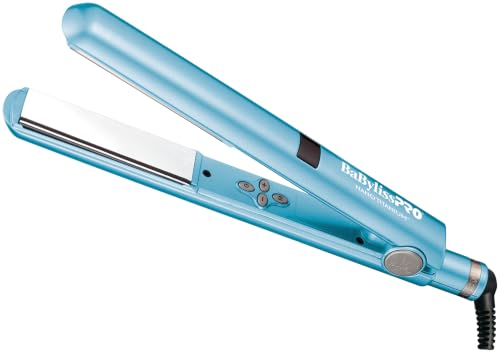


Titanium or ceramic flat iron tips
- Use heat protectant.
- Then start at a lower temperature.
- Above all, do not iron wet hair.
Straightening Technique That Reduces Damage
Technique matters as much as the tool. Start with completely dry, detangled hair, and apply a heat protectant evenly. Next, divide hair into sections, and clip away the rest. Take small sections about an inch wide, place the iron near the roots and glide it slowly to the ends in one smooth motion. Avoid pressing hard or clamping the same area repeatedly. If hair does not straighten after one or two passes, lower the speed of your pass rather than raising the temperature.
Afterwards, let hair cool before touching or brushing it, which helps the style set and reduces frizz.
Plate Width and Hair Length
- Narrow plates (about 1 inch or less): good for short hair, bangs and fine detailing.
- Medium plates (about 1 to 1.25 inches): versatile for most hair lengths.
- Wide plates (1.5 inches or more): faster for long, thick hair, but can be harder to curl with.
Beyond Straightening: Curls and Waves
Many flat irons can create curls and waves as well, with the right technique. Choose a model with rounded edges and a slim profile, and practice on small sections. Then twist the iron as you pull through the hair, and use a heat protectant. Remember that curling with a flat iron adds heat exposure, so use the same low-temperature approach.
Maintaining Healthy Hair with Regular Heat Styling
- Use deep conditioning treatments or masks weekly.
- Trim split ends regularly.
- Use a gentle shampoo and avoid washing too often.
- Also sleep on a satin pillowcase or bonnet.
- Give hair breaks from heat to help it recover.
Hair Types and Realistic Expectations
No flat iron will make every hair type behave the same way. Very curly or coily hair may need multiple passes or a different technique, such as a blowout first, and tightly coiled hair may shrink back in humid weather. In contrast, fine hair straightens easily but is prone to damage. Understanding your hair’s natural behavior helps you set realistic goals and choose methods that protect it. Humidity, product choice and prep all influence how long a style lasts.
Preparing Hair Before Straightening
- Wash with a moisturizing shampoo and conditioner.
- Apply a heat protectant and, if needed, a smoothing serum.
- Blow-dry on a medium setting with a nozzle to smooth the cuticle.
- Then detangle thoroughly so that the iron glides.
- Section hair and clip away the rest.
Maintaining Your Style Between Washes
Keep straightened hair smooth by protecting it overnight with a satin scarf or pillowcase, using dry shampoo at the roots if needed and avoiding humidity where possible. Refresh with a quick touch-up on the roots or ends rather than re-straightening the whole head. In short, overusing heat shortens the life of your hair, so pace your styling.
Flat Iron Buying Checklist
- Adjustable temperature with a clear display.
- Plate material and width suited to your hair length and type.
- Auto shut-off and a heat-resistant pouch or mat.
- A swivel cord of adequate length.
- Reviews that mention durability and consistent heat.
- A warranty that covers defects.
- Return policy in case the tool does not suit your hair.
Signs Your Hair Needs a Break from Heat
Hair that feels rough, looks dull, breaks easily, will not hold a curl or has many split ends is telling you to cut back. Give it a few weeks without heat, use deep conditioning treatments and consider a trim. Meanwhile, protective styles and air-dried looks can help your hair recover. If you notice patches of thinning or scalp irritation, speak to a doctor or a trichologist.
Related guides
Titanium vs Ceramic Flat Iron: Side-by-Side
The table below puts the titanium or ceramic flat iron question into one view. The entries describe typical behaviour; individual models vary.
| Factor | Titanium plates | Ceramic plates |
|---|---|---|
| Heat-up time | Very fast, often under 30 seconds | Slower, usually one to two minutes |
| Heat delivery | Strong surface heat that transfers quickly | Gentler, more even heat across the plate |
| Best hair types | Thick, coarse, very curly or resistant hair | Fine, thin, colour-treated or damaged hair |
| Risk if misused | Higher, because the plate runs hot and recovers fast | Lower, but a worn coating can snag hair |
| Durability | Solid plates last for years | Coated plates can chip; solid ceramic lasts longer |
| Weight | Light | Slightly heavier for the same size |
Whichever plate you choose, the American Academy of Dermatology advises using a flat iron only on dry hair, at a low or medium setting, and no more often than every other day.
Who Should Buy a Titanium Flat Iron, and Who Should Buy Ceramic
A titanium flat iron is the better fit for people with thick or coarse hair who currently need several passes with a ceramic tool. It also suits anyone who styles quickly in the morning and wants a plate that recovers heat between sections.
In contrast, a ceramic flat iron suits fine, colour-treated or previously damaged hair, beginners who are still learning to judge heat, and teenagers. Ceramic is also the safer choice if you plan to use the tool on more than one person in the household. If you are still unsure, our roundup of the best flat irons for natural hair explains which models combine both materials. Curly-haired readers who want to stretch rather than straighten may prefer a hair diffuser instead.
Illustrative Example: One Pass vs Three Passes
The numbers here are an example, not a measurement. Imagine two people with shoulder-length hair. The first has fine hair and uses a ceramic flat iron at a low setting. Each section needs one slow pass of about four seconds, so the hair sees roughly four seconds of heat per section.
The second has coarse hair and uses the same ceramic iron at the same low setting. Each section needs three passes, so the hair sees about twelve seconds of heat. A titanium flat iron on a medium setting might straighten the same section in one pass. As a result, the hotter plate can mean less total heat exposure for coarse hair, which is why the titanium or ceramic flat iron choice should follow your hair type rather than a general rule.
Care and Maintenance for a Titanium or Ceramic Flat Iron
Plates collect product residue, which burns and then transfers to your hair. Therefore, wipe the plates with a damp cloth once they are cool after every few uses. Never use abrasive pads, because they scratch ceramic coatings. Store the iron in a heat-resistant pouch, keep the cord loose rather than wrapped tightly around the handle, and check the plates for chips every month. A chipped ceramic plate or a pitted titanium plate should be replaced, since the rough surface snags the cuticle.
How to Spot a Low-Quality Flat Iron Listing
Flat iron listings lean heavily on buzzwords. Check these points before you buy a titanium or ceramic flat iron online:
- Plate material stated plainly: solid ceramic, ceramic-coated aluminium and titanium are different things. A listing that only says ceramic technology is probably describing a thin coating.
- Temperature range in degrees: look for a stated range and a digital readout. Low, medium and high alone is not enough.
- Safety certification: a UL or ETL mark means the electrical design has been tested.
- Auto shut-off time: reputable models state it, typically 30 to 60 minutes.
- Reviews that mention snagging or uneven heat: both point to poor plate quality.
Hair tools are discounted heavily in late November, so our hair care Black Friday guide explains how to tell a real discount from an inflated list price.
Frequently asked questions
Which is better for natural hair?
Either a titanium or ceramic flat iron works, with adjustable heat and heat protectant.
Does titanium damage hair?
Any hot tool can if used too hot, whether it is a titanium or ceramic flat iron.
What temperature is safe?
Start low and increase only as needed. For example, fine hair often straightens well below 300 degrees Fahrenheit.
How often can I flat iron?
Less often is gentler. Generally, every other day is the most dermatologists recommend.
Do you list prices?
No. Check the live price on Amazon.
Does titanium damage hair more than ceramic?
Any hot tool can cause damage if used too hot. Titanium heats quickly, so use a lower setting and avoid long contact time.
Which is better for natural hair?
Either can work with adjustable temperature, heat protectant and gentle technique.
What temperature should I use?
Start low and increase only if needed. Fine hair needs less heat than thick hair.
How often can I flat iron my hair?
As little as possible. Using it a couple of times a week or less is gentler than daily use.
More titanium or ceramic flat iron questions
Is a titanium or ceramic flat iron better for curly hair?
Coarse, tightly curled hair often straightens faster with titanium at a medium setting. Fine curly hair does better with ceramic at a low setting. In both cases, use a heat protectant.
Is a titanium or ceramic flat iron better for beginners?
Ceramic. It heats more gently and more evenly, which gives you time to learn the right speed and section size before moving to a hotter plate.
Can a titanium flat iron be used on fine hair?
Yes, if it has a low setting. Keep the temperature low, make one quick pass and avoid repeating sections.
Product picks are research-based, not tested by us. Check current prices and details on Amazon.
More guides you may like
- Amazon Black Friday 2026: Dates, Tips and Products to Watch
- Black Friday 2026 Hair Care Deals: Flat Irons, Diffusers and Curly Hair Picks
- Black Friday vs Cyber Monday: Which Is Better to Shop?
- Best Flat Irons for Natural Hair: 10 Top-Rated Picks
- Best Ceramic Sprays for Cars: 10 Top-Rated Picks
- Best Shoes for Flat Feet (Women): 10 Top-Rated Picks