Trolling motor battery run time depends on capacity, motor draw and speed. Check what your motor needs.

AGM trolling motor battery
- First, a lower upfront cost.
- However, heavier.
- Also, voltage drops as it discharges.

Lithium trolling motor battery
- First, light and steady power.
- Also a longer cycle life.
- However, a higher upfront cost.
Trolling motor battery picks
| # | Product | Where to check |
|---|---|---|
| 1 | Renogy 12 Volt 100Ah Deep Cycle AGM Battery, Lead Acid Solar Battery | Check current price on Amazon |
| 2 | Mighty Max Battery 12V 55Ah Power Boat Pontoon Electric Trolling Motor Deep Cycle Battery | Check current price on Amazon |
| 3 | Mighty Max Battery 12V 100AH Battery for Solar Wind DEEP Cycle VRLA 12V 24V 48V | Check current price on Amazon |
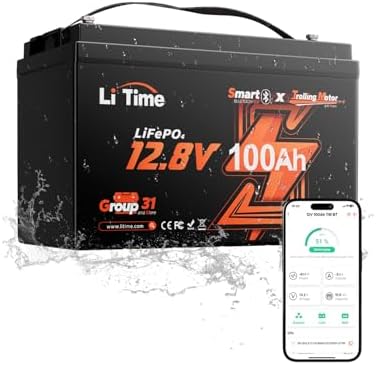
| 4 | Litime 12V 100Ah Trolling Motor LiFePO4 Battery for Marine, Boat, Yacht | Check current price on Amazon |
As an Amazon Associate we earn from qualifying purchases. Prices and availability change, so confirm the price on Amazon before buying. These are research-based picks, not products we have tested. How we choose.


Trolling motor battery tips
- First, match voltage to the motor.
- Then use a compatible charger.
- Finally, secure the battery in the boat.
Wiring and Setup Basics
Wiring a trolling motor system correctly matters for safety and performance. For 24-volt systems, two 12-volt batteries are wired in series, and for 36-volt systems, three. Then use cables of the right gauge and keep them short and neat to reduce voltage drop. In addition, a circuit breaker or fuse sized for the motor’s maximum current protects the wiring in case of a short. Also use marine-grade connectors and protect terminals from corrosion. If you are unsure about wiring, ask a marine technician or follow the manual closely.
Charging and Storage Best Practices
- Recharge as soon as possible after use to extend battery life.
- Also use a charger matched to the battery type and voltage.
- In addition, charge in a ventilated space, away from sparks or flames.
- Above all, do not charge a frozen battery.
- For winter storage, charge fully and store in a cool, dry location, checking periodically.
- Keep terminals clean and apply a protectant if recommended.
Trolling Motor Battery Capacity and Real-World Run Time
Rated capacity assumes ideal conditions. In practice, however, cold temperatures reduce capacity, high speeds draw much more current and wind and currents increase load. Therefore, many anglers plan for a margin, so that they never run the battery to empty. If you often run out, consider a larger capacity battery, a more efficient motor setting or a lithium battery that delivers more usable capacity. Finally, keep notes of your trips to learn how long your setup lasts.
Troubleshooting Weak Performance
- Check connections for corrosion or looseness.
- Then test battery voltage when fully charged and under load.
- Also inspect cables for damage.
- Make sure the motor propeller is free of weeds or line.
- Finally, consider replacing aging batteries that no longer hold charge.
Choosing a Battery Box and Securing Your Setup
A sturdy battery box keeps batteries from sliding and protects terminals from spray and accidental contact. Therefore, choose a box sized for your battery, with a secure strap. Also place batteries low and near the centerline of the boat for balanced weight. Make sure cables are routed away from moving parts and sharp edges. Finally, cover terminals and keep metal tools away from them to prevent short circuits.
Planning Battery Capacity for Different Trips
- Short trips and calm water: smaller capacity may be enough.
- All-day fishing: larger capacity or a lithium battery for steady power.
- Windy conditions or heavy boats: plan extra capacity.
- Multi-day trips: consider carrying a second battery.
- Cold weather: expect shorter run times and charge fully before leaving.
Recycling and Disposal
Batteries contain materials that should not go in household trash. Instead, take old lead-acid and lithium batteries to a recycling center or retailer that accepts them. For example, many stores take back old batteries when you buy a new one. Follow local rules and never puncture, burn or dismantle batteries.
Common Trolling Motor Battery Mistakes
- Using a starting battery instead of a deep-cycle battery.
- Letting batteries sit discharged for long periods.
- Also, mixing batteries of different ages or types.
- Likewise, using the wrong charger.
- Similarly, neglecting corrosion on terminals.
- Underestimating how wind and current increase power demand.
Planning a Fishing Day Around Your Battery
Check your battery before you leave, bring a charger or a spare battery for long trips and keep an eye on the voltage during use. Also use lower speeds when possible, plan routes with the wind and current in mind and head back before the battery is nearly empty. Safety comes first, and a dead battery far from shore is a hazard.
Related guides
Trolling Motor Battery Size by Thrust and Voltage
In short, thrust decides the voltage, and voltage decides how many batteries you need. The table below shows the usual pairings for a trolling motor battery bank. Always confirm the figures in your motor manual.
| Motor thrust | System voltage | Batteries needed | Typical capacity per battery | Common boat |
|---|---|---|---|---|
| 30 to 55 lb | 12 V | One 12 V deep-cycle | 50 to 100 Ah | Kayak, jon boat, small inflatable |
| 70 to 80 lb | 24 V | Two 12 V in series, or one 24 V lithium | 100 Ah each | Bass boat, larger aluminium boat |
| 101 to 112 lb | 36 V | Three 12 V in series, or one 36 V lithium | 100 Ah each | Heavy bass boats, pontoons, bay boats |
Weight is where the AGM and lithium paths split. Three 100 Ah AGM batteries can weigh around 180 pounds combined, while a single 36 V lithium pack of similar usable capacity often weighs under 80 pounds. In a small boat, that difference changes how the hull sits and how fast it planes. For general guidance on marine battery types, BoatUS has a useful primer on choosing a marine battery.
Who Should Buy Lithium, and Who Should Stay With AGM
A lithium trolling motor battery is the better buy for anglers who fish several days a week, run 24 V or 36 V systems, or own a small boat where weight matters. The higher cycle life means the extra cost is spread over many more trips, and the steady voltage keeps the motor responsive all day.
In contrast, AGM still makes sense for occasional use, a 12 V motor on a kayak or dinghy, or a boat you keep for only a season or two. AGM also tolerates a basic charger and cold storage without a battery management system. If you are weighing specific models, our roundup of the best batteries for trolling motors compares both chemistries. Anglers who fish at dawn may also want a reliable headlamp for rigging in the dark.
Illustrative Example: Run Time Over a Season
The numbers below are an example, not a test. Picture a 55 lb thrust 12 V motor that draws about 20 amps at half speed. A 100 Ah AGM trolling motor battery, used to a sensible 50 percent depth of discharge, gives roughly 50 usable amp hours, or about two and a half hours at that speed.
A 100 Ah lithium battery, used to 80 or 90 percent depth of discharge, gives 80 to 90 usable amp hours, or about four hours at the same speed. Over a 40-trip season, that is the difference between recharging on the water and finishing most days with capacity to spare. As a result, many anglers who thought they needed a bigger AGM battery actually needed a lithium one of the same size.
How to Spot a Low-Quality Trolling Motor Battery Listing
Battery listings mix real specifications with marketing. Therefore, check these points before you order:
- Deep-cycle stated: a starting or dual-purpose battery is not designed for the slow, deep discharge of trolling.
- Amp hours at a stated rate: look for a 20-hour rating. Listings that give only cold cranking amps are describing a starting battery.
- Battery management system for lithium: the listing should mention a BMS with low-temperature charge protection, which matters for winter storage.
- Dimensions and group size: confirm the battery fits your box. Group 24, 27 and 31 are common sizes.
- Warranty length and reviews about capacity loss: a short warranty paired with reviews of fast fade points to recycled or low-grade cells.
Frequently asked questions
How long will a battery last?
It depends on amp hours and motor draw. A 100 Ah trolling motor battery at 20 amps gives a few hours.
Can I mix battery types?
Generally not. A trolling motor battery bank should use matching batteries of the same age and type.
Do I need a special charger?
Use one made for the battery type. Otherwise, you risk undercharging or damaging the cells.
What voltage?
Match the motor. For example, a 24 V motor needs two 12 V batteries in series.
Do you list prices?
No. Check the live price on Amazon.
How long will a trolling motor battery last on the water?
It depends on capacity, motor current draw and speed. Dividing usable amp hours by the current draw gives a rough estimate.
Can I use a car battery for a trolling motor?
Starting batteries are not designed for deep discharge. Use a deep-cycle battery made for this purpose.
Do I need a special charger for lithium?
Yes. Use a charger designed for LiFePO4 batteries.
What voltage do I need?
Match the voltage specified for your trolling motor, commonly 12, 24 or 36 volts.
More trolling motor battery questions
How many amp hours should a trolling motor battery have?
For a 12 V motor, 100 Ah is the common choice for a full day; 50 to 80 Ah suits short trips. Larger thrust motors use 24 V or 36 V banks of 100 Ah batteries.
Can I charge a lithium trolling motor battery with my old AGM charger?
Usually not. Lithium batteries need a charger with a LiFePO4 profile. Some AGM chargers reach a suitable voltage, but check the battery maker guidance first.
How long does a trolling motor battery last before replacement?
AGM batteries often give three to five seasons with good charging habits. Lithium batteries are rated for thousands of cycles and commonly last eight to ten years.
Follow battery and boating safety instructions. Product picks are research-based, not tested by us. Check current prices and details on Amazon.
More guides you may like
- Amazon Black Friday 2026: Dates, Tips and Products to Watch
- Black Friday 2026 Date: When Does It Start and End?
- How to Track Amazon Price Drops Before Black Friday
- Best Batteries for Trolling Motors: 9 Top-Rated Picks
- 10 Best Electric Wheelchair for Adults: Lightweight, Foldable, Long-Range Mobility
- Best Cat Flea Collar Options for Effective and Long-Lasting Protection